How to Read MIA's Layout Before You Land: 5 Terminals
MIA has 5 terminals with 107 restaurants and 133 shops. Learn where TSA hits 46 minutes and immigration hits 74, and how to walk it without backtracking.
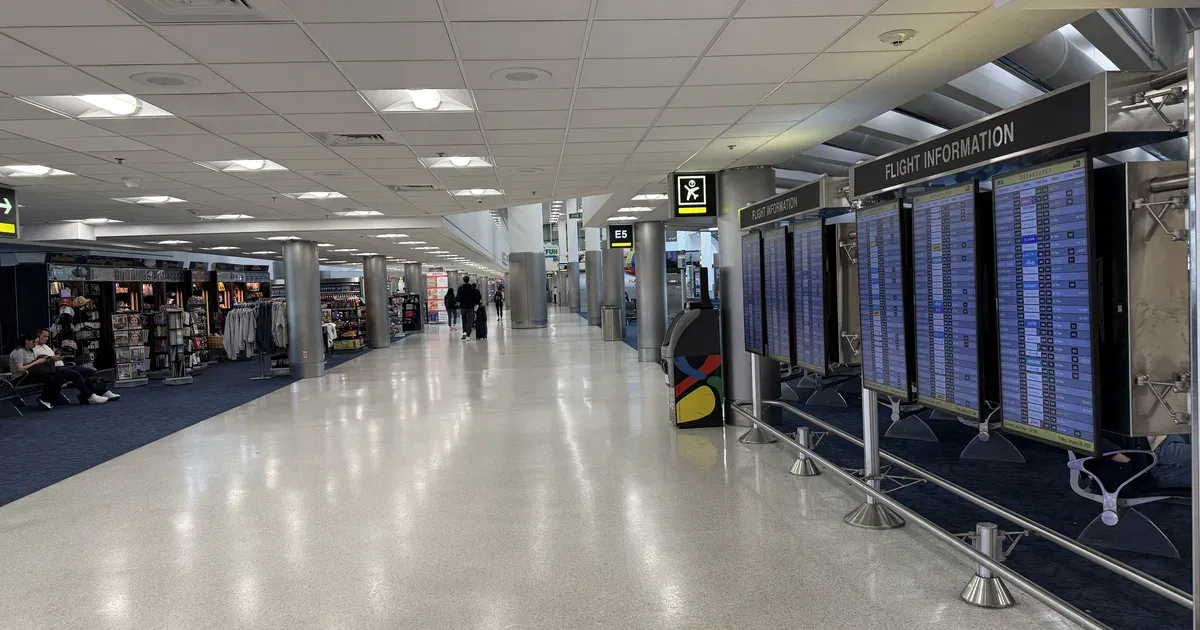
Pull up MIA before you leave for it. Five terminals, 107 restaurants, 133 shops, and two spikes you can set a watch to: 46 minutes at security on Mondays at 12 PM and 74 minutes at immigration on Sundays at 3 PM. My read after sitting with FlyIndex’s data for MIA is pretty direct — don’t memorize the map first, memorize the timing, then let the map make sense.
That’s the trick with Miami. People open the terminal diagram and try to learn it like a subway system, all lines and dots, and then the day itself ignores the diagram. What actually decides your trip is when you walk in and where you decide to wait. According to FlyIndex’s data for MIA, the building behaves less like five separate terminals and more like one long, connected machine that clogs at the same two places each week. Learn those clogs and the rest gets easy.
If you want the raw patterns alongside this, keep the MIA TSA wait times page and the MIA hub page open in other tabs. You’ll use them.
Why does Monday at noon turn into MIA’s worst checkpoint hour?
Monday at noon isn’t random. It’s business travel colliding with everything else Miami does.
The 46-minute peak on Mondays at 12 PM is the worst TSA hour FlyIndex logs for MIA, and honestly it fits the airport. Monday midday pulls the weekend stragglers, the business shuttle crowd heading out for the week, and a whole set of Latin America and Caribbean banks that don’t follow a 9-to-5 U.S. schedule, all into the same checkpoint lanes at the same time. It’s not that Monday is busier all day. It’s that everyone wants through the door at lunch.
I’d treat that hour as a single event, not a single hour. If your flight leaves at 1:30 PM on a Monday, you’re inside it. If it leaves at 11:40 AM, you’re in front of it but boarding while the line behind you is building, which means any delay at bag drop hurts more. Look, the move here is boring and it works: get to the curb early, clear, then relax. Don’t try to time it to the minute.
The part people get wrong is thinking they can outsmart noon by arriving at 11:30. You can’t thread a 46-minute peak that tightly. Give it a real buffer, check the bag, get through, and then go find that medianoche sandwich you’ve been staring at on the restaurants at MIA list. It tastes a lot better when you’re not watching the clock.
That’s thin comfort if you’re already booked on the crush flight. I get it.
What do 29 quiet slots actually leave you on a normal travel day?
Not much, and that’s worth saying plainly.
FlyIndex counts only 29 quiet slots for MIA, which is a small number for an airport that never really sleeps. For what it’s worth, my take is that Miami doesn’t do calm the way a small airport does calm. A small airport goes dead for hours. MIA just goes slightly less packed, and then fills right back up.
The three calmest hours in the data are:
- 1 AM — quietest in the set
- 12 AM — second quietest
- 2 AM — third
Read that list once and you’ll see the problem. The quietest times at MIA are when almost nobody wants to fly. They’re overnight hours, useful if you’re on a red-eye or stuck on an irregular operation, useless if you’re trying to pick a pleasant 10 AM departure. Don’t book a 1 AM flight to dodge a line unless you actually want a 1 AM flight. Your mileage may vary, but sleep matters more than 20 saved minutes at screening.
So what do 29 quiet slots buy a daytime traveler? Kind of a warning, more than a gift. It means you should assume the checkpoint has some line whenever you’re flying in daylight, especially late morning through afternoon, and plan food, bathroom and gate walks around that assumption rather than hoping for an empty hall. The MIA terminal maps help here less as a navigation puzzle and more as a reminder not to backtrack: pick your entry, clear, stay put.
If there’s a caveat, it’s this — quiet in the data doesn’t always feel quiet when your concourse has three widebodies boarding at once.
How do you plan for a Sunday 3 PM immigration peak?
This is the bigger number in the building, and most people plan for the wrong one.
Immigration at MIA peaks at 74 minutes on Sundays at 3 PM. Set that next to the 46-minute TSA peak and the math is obvious. The worst arrival wait is almost half an hour longer than the worst departure wait. People obsess over security and then book a 90-minute connection off an international flight on a Sunday afternoon, which is backwards.
Sunday at 3 PM makes sense when you think about how Miami works. Weekend returns, cruise turns, Caribbean and South America inbound banks that all want to land in daylight, plus U.S. citizens and visitors funneling into the same hall. CBP can only process so many passports per minute, and when four flights hit the hall together the queue doesn’t grow politely. It jumps.
According to FlyIndex’s own historical data for MIA, that Sunday spike stands alone. It’s not part of a broad weekend smear where every hour is equally bad. It’s a peak, which means the hours around it inherit some of the pain — bags pile up, the line for secondary screening stretches, the curb gets messy — but 3 PM Sunday is the center of it. Check the immigration waits at MIA before a Sunday trip the way you’d check weather before a boat day. Same seriousness.
Here’s how I’d play it. If you’re landing internationally at MIA on a Sunday afternoon, don’t book the next flight out unless you have to. Give it hours. Global Entry helps if you have it, but it doesn’t reclaim your checked bag faster and it doesn’t make the person in front of you move faster either. And if you’re picking someone up, don’t circle the arrivals curb at 3 PM expecting a quick hello. Park, get a cafecito, track the flight, let the hall clear.
I keep coming back to this because it’s the one place where MIA genuinely punishes optimism. A 74-minute peak means someone in that hall is waiting over an hour, and on a Sunday that someone could easily be you. Build the connection like you believe the number, not like you hope you’re the exception. The exception still has to wait for a bag.
One more wrinkle for connecting travelers. A Sunday international-to-domestic connection at MIA forces you through that immigration hall, then bag recheck, then security again, then a walk that can feel endless when you’re already tired. Each step is fine alone. Stacked after a 74-minute start, with a boarding door that closes 15 minutes before departure whether you’re in line or not, the stack is the trip. Honestly, I’d rather have a three-hour layover and spend an hour eating than a 90-minute layover spent jogging past 133 shops I can’t stop to look at.
Where do 107 restaurants and 133 shops actually help you?
They help you stay put, which at MIA is a strategy, not laziness.
One hundred seven restaurants and 133 shops is a lot of commercial weight for five terminals. The naive read is that more choice means you should explore. My read is the opposite. Because there’s that much food and retail spread through the building, you almost never need to leave your gate area to find something decent. Use the density to avoid walking, not to justify it.
Think about it against those two peaks. If you’re early for a Monday noon flight — and you should be — you don’t want to clear security in one place, hike three concourses for lunch, then hike back through a crowd that’s gotten 46 minutes deep while you were gone. You want to clear, look at what’s near you, sit down. Same on arrival, different direction. If you’re stuck landside waiting out that Sunday immigration crush for someone else, the pre-security options keep you from hovering on the curb.
Don’t chase a specific meal across the airport. I know the temptation, especially in Miami where even airport food talk turns into a debate about croquetas versus empanadas and where the best cafecito window is hiding. It’s a fun debate. It’s still not worth missing a flight over. Find the good-enough Cuban spot near your gate, get the medianoche pressed and dripping, watch the departure board instead of the directory. The shops at MIA work the same way — fine for killing 30 minutes you already have, terrible as a reason to create 30 minutes you don’t.
| Situation | What FlyIndex shows for MIA | How I’d handle it |
|---|---|---|
| Monday midday departure | 46 min TSA peak Mondays at 12 PM | Arrive with a real buffer, clear first, eat near gate |
| Sunday afternoon arrival | 74 min immigration peak Sundays at 3 PM | Long connection, no tight turn, let bags come |
| Overnight hours | 1 AM, 12 AM, 2 AM calmest of 29 quiet slots | Nice if you’re already there, not a reason to book red-eye |
| Long dwell with options | 107 restaurants and 133 shops across 5 terminals | Pick near your gate, don’t cross the airport for food |
That table is the whole airport on an index card, and for most trips it’s enough. The details change by airline and gate, sure, but the shape doesn’t: enter early on Mondays, connect loosely on Sundays, stay local for food.
What should you check before you head for MIA?
Check the pattern, then check the day.
Open the TSA and immigration pages the morning you fly, not the week before. Patterns like a Monday noon 46-minute peak and a Sunday 3 PM 74-minute peak hold across seasons, but any single Monday can run hot or cool depending on staffing, weather in the Northeast, a delayed bank out of Bogotá, a cruise ship that docked late. The number tells you what to expect. The day tells you what you’re getting.
And look at the MIA hub page for the current layout notes before you promise someone you’ll meet them at a specific door. Five terminals sounds simple until you’re trying to describe which curb you’re on while cars honk behind you. Pin the terminal, pin the level, send the pin.
If I had to boil it to one habit, it’s this: let Monday noon and Sunday afternoon scare you a little. They’re supposed to.
Frequently asked questions
What is the worst time to go through security at MIA?
Monday at 12 PM. FlyIndex data puts MIA's TSA peak at 46 minutes in that hour, so a late-morning arrival for an early-afternoon flight lands you right in the bank. Come earlier or later than that window if you can.
How early should I get to MIA for a Monday midday flight?
I'd plan on a full two-hour buffer for anything leaving around midday Monday. That covers the 46-minute peak plus bag drop and the walk, which at MIA's size is never trivial. Off-peak weekdays you can trim it, but not by much.
How long does immigration take at MIA?
It peaks at 74 minutes on Sundays at 3 PM in FlyIndex data. That's longer than the worst TSA line in the building, and it means a tight Sunday connection off an international arrival is risky. Give yourself hours, not minutes.
Can I find food without changing terminals at MIA?
Yes. MIA has 107 restaurants and 133 shops spread across its 5 terminals, so you don't need to hike for a meal. Pick something near your gate, especially on a Monday noon or Sunday afternoon when moving around costs you time in lines elsewhere.
Sources
- TSA Security Screening
Transportation Security Administration · tsa.gov
- CBP Airport Wait Times
U.S. Customs and Border Protection · awt.cbp.gov
- Miami International Airport
Miami International Airport · miami-airport.com
Keep reading
 terminalsMIAORD
Know Your MIA Terminal Before You Leave for the Airport
MIA runs 5 terminals with a 46-minute Monday noon TSA peak. Verify your airline terminal before leaving and use ORD's 4-terminal contrast to plan curb to gate.
FlyIndex Editorial terminalsMIA
MIA's Central Terminal: The E, F, and G Gates Explained
Miami's Central Terminal holds the E, F and G concourses, 32 restaurants and the airport hotel. Here's how it connects and what's actually worth your time.
FlyIndex Editorial terminalsMIA
MIA Terminals: North, Central, and South Explained
Miami's five terminals split into North, Central, and South zones, and each behaves like a different airport. Here's how to know which one you need.
FlyIndex Editorial