The Second Airport Isn't Always the Shorter Line
Fort Lauderdale peaks at 69 minutes against Miami’s 46. Ontario beats LAX by 38. Here is when the alternate airport in your city actually saves you time.
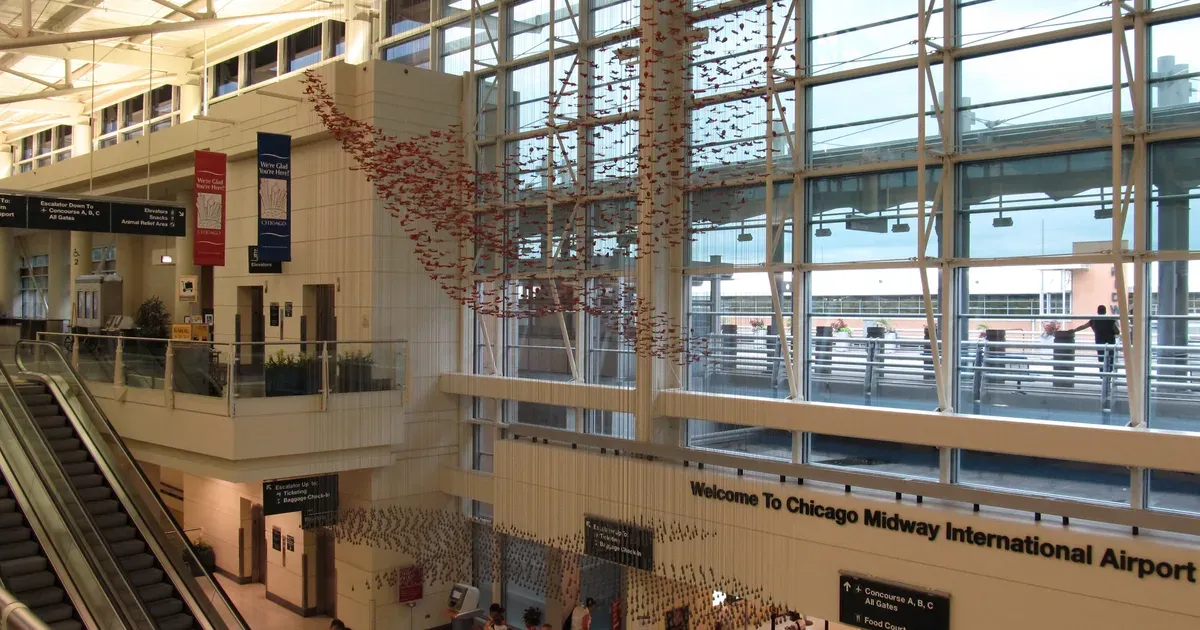
Fly out of Fort Lauderdale instead of Miami and you’ll wait longer at the checkpoint. Not on average — at the top, where it counts. FLL peaks at 69 minutes in FlyIndex’s TSA data. MIA peaks at 46.
That inversion is the point of this piece. The received wisdom says the second airport in a metro area is the calm one, and often it is, but the exceptions aren’t rare and they aren’t small.
The same-city table
Every figure here is from our hourly TSA wait-time records: the worst hour of the week, the average across all recorded hours, and the count of quiet slots — hours where the maximum wait is five minutes or less.
| Metro | Airport | Peak | Average | Quiet slots |
|---|---|---|---|---|
| Chicago | ORD | 30 min | 12.8 | 28 |
| MDW | 19 min | 4.1 | 127 | |
| Houston | IAH | 60 min | 15.6 | 12 |
| HOU | 21 min | 6.3 | 65 | |
| Washington | DCA | 28 min | 9.1 | 29 |
| IAD | 19 min | 5.3 | 119 | |
| BWI | 25 min | 8.1 | 47 | |
| Dallas | DFW | 32 min | 16.3 | 23 |
| DAL | 24 min | 10.6 | 25 | |
| New York | JFK | 33 min | 19.1 | 0 |
| LGA | 49 min | 12.5 | 42 | |
| EWR | 30 min | 16.2 | 23 | |
| Los Angeles | LAX | 25 min | 14.6 | 10 |
| BUR | 38 min | 8.3 | 29 | |
| ONT | 63 min | 11.0 | 35 | |
| Bay Area | SFO | 22 min | 9.5 | 17 |
| SJC | 38 min | 12.3 | 25 | |
| South Florida | MIA | 46 min | 14.1 | 29 |
| FLL | 69 min | 19.8 | 16 |
Read down the peak column and the pattern breaks in four of the eight metros.
Where the swap is a straight win
Chicago is the cleanest case in American aviation. Midway averages 4.1 minutes and has 127 quiet hourly slots — more than three-quarters of the week where the checkpoint is effectively empty. O’Hare averages 12.8 with 28. Midway’s worst hour of the entire week — 19 minutes, Monday at 7 AM — is roughly what O’Hare averages across a Sunday afternoon.
Houston is the biggest gap we track. Bush peaks at 60 minutes; Hobby peaks at 21. That’s a 39-minute swing on the same city’s traffic, and Hobby’s 65 quiet slots against Bush’s 12 says the difference isn’t a one-hour fluke.
Washington rewards going further out. Dulles has a 19-minute ceiling and 119 quiet slots, the second-best slack figure in the table, while National — the convenient one, the one on the Metro — peaks at 28 with 29 quiet hours. If your meeting is downtown you’ll take National anyway, and that’s a fair trade. Just don’t tell yourself it’s the faster checkpoint.
Where it backfires
South Florida is the headline. Fort Lauderdale isn’t just worse than Miami at the peak; it’s worse on the average too, 19.8 minutes against 14.1, and it has fewer quiet slots. The cheap fare into FLL is real. The quick checkpoint is not.
Los Angeles is more interesting, because it splits. Ontario peaks at 63 minutes and Burbank at 38, both far above LAX’s 25 — and yet both average lower than LAX, at 11.0 and 8.3 against 14.6. What that means in practice: the outlying airports are calmer nearly all the time, then briefly awful when a bank of departures hits a checkpoint with a handful of lanes. Ontario’s 63-minute hour is a Saturday at 5 AM. Miss that hour and you’re in a lovely little airport. Book into it and you’ll wonder what happened.
San Jose does the same thing to Bay Area travelers: a 38-minute peak against SFO’s 22.
The mechanism, briefly
A hub can open fifteen screening lanes. A secondary airport might run four. When demand is ordinary, four lanes on a small crowd is faster than fifteen on a big one — that’s the average-hour advantage, and it’s genuine.
When a departure bank lands all at once, the hub absorbs it and the small airport can’t. There’s no fifth lane to open. The queue simply grows until the bank clears. We made this argument at greater length in the small airport advantage piece, and the same-city pairs are the sharpest version of it, because the two airports are serving the same travelers on the same days.
New York is its own category
The three New York airports don’t sort into “hub” and “alternate” — they’re three hubs. And the numbers do something strange.
JFK has the lowest peak of the three at 33 minutes. It also has an average of 19.1 minutes, second only to Fort Lauderdale’s in this table, and zero quiet slots. Not one hour of the week at JFK runs at five minutes or less.
LaGuardia peaks at 49 — the worst ceiling in the metro — but averages 12.5 and logs 42 quiet slots. Newark sits between them.
So “which New York airport is faster” has no single answer. JFK is the one that never gets terrible and never gets good. LaGuardia is the one that’s usually fine and occasionally dreadful. If you’re a nervous flyer who arrives three hours early regardless, JFK’s consistency suits you. If you’re optimizing an 11 AM Tuesday departure, LaGuardia is the better airport, whatever your last Sunday-afternoon experience there suggested.
How to actually use this
The rule is simpler than the table looks.
If your departure hour is fixed — a work trip, a connection you can’t move, the only nonstop of the day — plan on the peak column, and check the specific hour rather than the airport’s headline number. A 63-minute ceiling at Ontario is irrelevant if you’re flying at 2 PM.
If your departure hour is flexible, plan on the average and the quiet-slot count. That’s where Midway, Hobby and Dulles pull away, and the gap is big enough to be worth a longer drive.
Then check the three things the wait-time data can’t tell you:
- Schedule depth. Twelve daily departures on your route means a cancellation costs hours. Two means it costs a day.
- Ground time. Ontario is 45 minutes from central LA without traffic, which is a sentence that has never once been true in practice.
- Rebooking options. If your trip absolutely must happen, the hub’s alternative flights are worth more than the alternate airport’s shorter line.
Nobody chooses an airport on checkpoint data alone. But most people choose one on a story they heard — Midway’s a breeze, Fort Lauderdale’s easier than Miami — and half those stories are the opposite of what the hourly numbers say. Fort Lauderdale is the one I’d fix first.
Frequently asked questions
Is a smaller airport always faster than the big hub?
No. On the average hour, usually. At the worst hour, often not — Fort Lauderdale peaks at 69 minutes against Miami at 46, and Ontario peaks at 63 against LAX at 25.
Which US city has the biggest gap between its two airports?
Houston. Bush Intercontinental peaks at 60 minutes and averages 15.6; Hobby peaks at 21 and averages 6.3. Nothing else in the data comes close to a 39-minute peak gap.
Is Midway really faster than O’Hare?
Yes, and by a lot. Midway's peak is 19 minutes against O'Hare's 30, its average is 4.1 against 12.8, and it logs 127 quiet hourly slots against 28.
Should I fly out of LaGuardia or JFK?
It depends on your hour. LaGuardia has the higher ceiling at 49 minutes, but JFK has no quiet slots at all and a 19.1-minute average, higher than every airport here except Fort Lauderdale. For an off-peak departure LaGuardia is the calmer airport.
What is a quiet slot?
An hour of the week where the recorded maximum wait is five minutes or less. It is the best single measure of how much slack an airport has, because it counts how often the checkpoint is genuinely empty rather than how bad it gets.
Sources
- Security Screening
Transportation Security Administration · tsa.gov
- TSA Passenger Volumes
Transportation Security Administration · tsa.gov
Keep reading
 strategyLAXMIA
The Red-Eye Is the Only Flight Without a Line
TSA data across major U.S. airports shows overnight hours are the quietest of the week. Here's what the red-eye actually saves you, hour by hour.
FlyIndex Editorial strategyLAXORD
How to Read a TSA Wait-Time Table Like an Analyst
A TSA wait-time table has more information than most people know what to do with. Here's how to read one properly and turn it into an arrival plan.
FlyIndex Editorial strategyDENJFK
What Moving Your Flight One Hour Actually Saves You
At Denver, shifting one hour earlier cuts 30 minutes off the line. At JFK it saves four. The one-hour shift is worth wildly different amounts by airport.
FlyIndex Editorial