How to Read a TSA Wait-Time Table Like an Analyst
A TSA wait-time table has more information than most people know what to do with. Here's how to read one properly and turn it into an arrival plan.
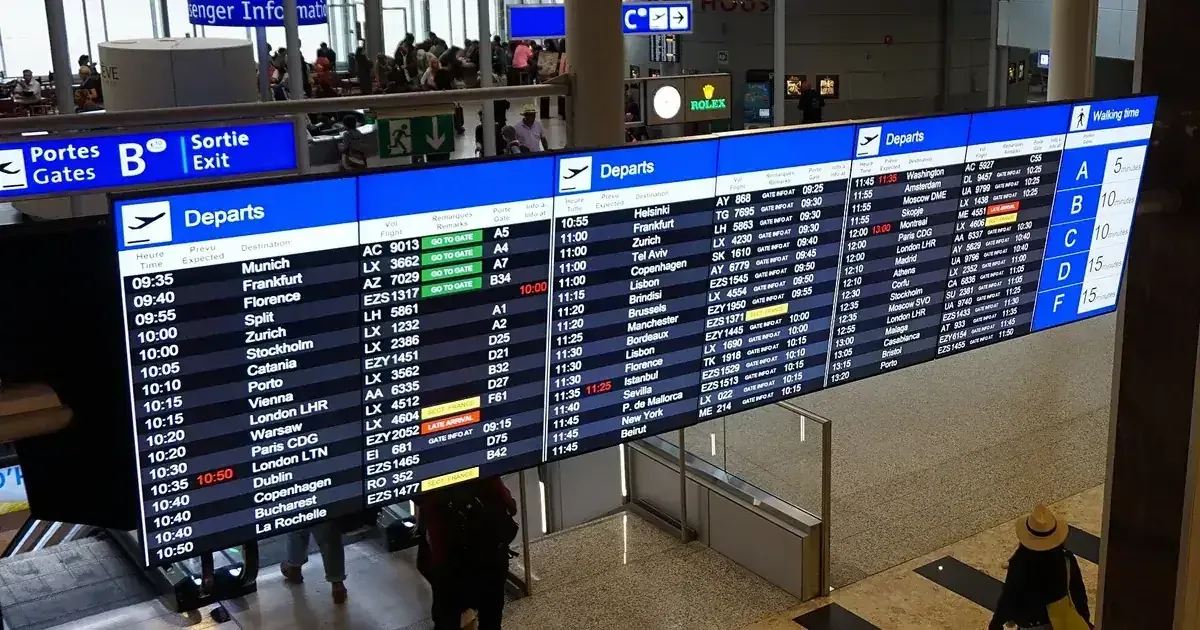
A TSA wait-time table looks like a wall of numbers until you know what to look at. I’ve spent years reading these grids professionally, and there are exactly four things that matter. Learn those four, and a wait-time page stops being a wall of numbers and becomes an arrival plan.
Let me walk through how I actually read one.
Find the peak first
The peak is your worst case, and it’s the first thing I look for. On the LAX TSA wait times page, the peak is 25 minutes on Sunday at 9 AM. That number is the planning anchor. If you’re flying out of LAX on a Sunday morning, that 25 minutes is what the line can do, and you build your arrival around it.
The peak tells you the day and hour to avoid if you can, and the worst case to plan for if you can’t. It’s not the average, and treating it as the average is how people show up late. Treat it as the ceiling, and you’re rarely wrong.
Find the quiet slot next
The second thing I look for is the quiet hours. The MIA TSA wait times page calls out best times of 12 AM to 2 AM, and O’Hare’s sit at 1 AM to 2 AM as well. Those hours are the cheat code: waits under 5 minutes, checkpoints moving fast, terminals half empty.
The gap between the peak and the quiet slot is the whole story of an airport. A big gap means your arrival time matters enormously. A small gap means the airport is busy all day and the hour barely matters. Miami’s gap is huge: 46 minutes at Monday noon versus the overnight quiet. That’s an airport where the clock is everything.
Understand what “best times” means
The best times in the data are the hours where the quiet slots cluster. A quiet slot is an hour where the wait stayed at 5 minutes or less, and airports report how many of those they have. It’s a measure of how much easy window an airport actually offers.
An airport with a lot of quiet slots, like O’Hare’s 28, has a real easy window you can plan around. An airport with zero quiet slots, like JFK, is busy in every direction, and the arrival math is different. You’re planning for a floor, not a window.
The trap: early morning is not quiet
Here’s the mistake I see most often, and the data keeps proving it. The 5 AM to 7 AM bank is often the busiest stretch of the day, not the quietest. Houston’s Sunday 6 AM slot runs 60 minutes. Indianapolis’s Friday 6 AM runs 63. The overnight hours are quiet, and then the first departure bank of the day hits the checkpoint all at once.
When you read a table, don’t assume the early hours are the easy hours. Read the actual numbers for your departure hour, because the table has no assumptions in it.
Turning the table into an arrival time
Once you’ve found the peak for your day and hour, the arrival math is straightforward:
- Start with the peak wait for your exact departure hour.
- Add the walk to the gate. At a big airport like LAX, that’s 10 to 20 minutes depending on terminal.
- Add bag drop if you’re checking a bag. The line runs on the same schedule as the checkpoint.
- Add a 30 minute buffer. Things go wrong, and the buffer is where they happen.
The arrival guide for your airport does this math in one place, and the wait-time page is the input it uses. Together they’re the full plan.
A worked example
Let me do it once with real numbers so the method sticks. Say you’re flying out of O’Hare on a Sunday afternoon. The table’s peak is 30 minutes at 3 PM, so that’s your planning anchor. Add the walk to your gate at a four-terminal airport, add bag drop if you’re checking a bag, add the 30 minute buffer, and your arrival time lands around two hours before departure, not the 90 minutes you’d have guessed.
Now the same trip on a Tuesday. O’Hare’s Tuesday peak is 19 minutes, and the quiet hours sit at 12 AM to 2 AM. The anchor is smaller, the buffer does more of the work, and 90 minutes actually covers it. Same airport, same airline, same gate area. Different table, different plan. That’s the whole skill.
What the table can’t tell you
The honest limit of a wait-time table is that it’s historical, not predictive. It tells you what the checkpoint has done at that day and hour, and airports are remarkably consistent about repeating those patterns, but weather, staffing, and one-off events can move the numbers. The table is your best guess, not a guarantee.
That’s why the buffer exists. The table shrinks the uncertainty, and the buffer absorbs what’s left. Use both, and the wall of numbers becomes a plan instead of a mystery.
The one-paragraph version
Reading a TSA table is a four-step process: find the peak, find the quiet hours, check how many quiet slots the airport has, and never assume early morning is quiet. The peak is your worst case, the quiet hours are your best case, and your arrival time sits somewhere in between once you add the walk, the bag drop, and the buffer. The table has been telling you the answer all along. It just needed you to know what to look for.
Frequently asked questions
How do I read a TSA wait-time table?
Look for the peak slot and the quiet slot first. The peak is your worst case, the quiet hours are your best case, and your arrival plan should sit between them.
What does a peak TSA wait time mean?
It's the worst wait recorded at that day and hour in the historical data. It's your planning number for the worst case, not the average.
What are quiet slots in TSA data?
Hours where the wait stayed at 5 minutes or less. Airports with many quiet slots have a real easy window; airports with none are busy all day.
How early should I arrive based on wait data?
Take your checkpoint's peak wait for your departure hour, add the walk to the gate, bag drop time, and a 30 minute buffer. That's your arrival time.
Keep reading
 strategyLAXMIA
The Red-Eye Is the Only Flight Without a Line
TSA data across major U.S. airports shows overnight hours are the quietest of the week. Here's what the red-eye actually saves you, hour by hour.
Mara Quinn strategySFOJFK
Is Global Entry Worth It? The Wait Data Says Yes
SFO's customs line hits 79 minutes, ORD 78, and JFK and LAX 77. At $120 for five years, Global Entry pays for itself fast. Here's the math.
Lena Vasquez strategyINDIAH
The 5 AM Trap: Airports Where Early Morning Is the Worst Time
The early-morning bank is the worst TSA window at a surprising number of airports. Indianapolis hits 63 minutes at 6 AM on Fridays; here's the full list.
Mara Quinn