The Quiet-Slot Count Is the Airport Stat Nobody Checks
Midway logs 127 hourly slots under five minutes. JFK logs zero. This one number tells you more about an airport than its headline peak wait ever will.
Everyone looks at peak wait. It’s the number in the headline, it’s the number in the frontmatter, it’s the number that makes people book the 5 AM flight. Fine. But it’s the second-most useful stat on any airport page, and the first one is sitting right next to it getting ignored.
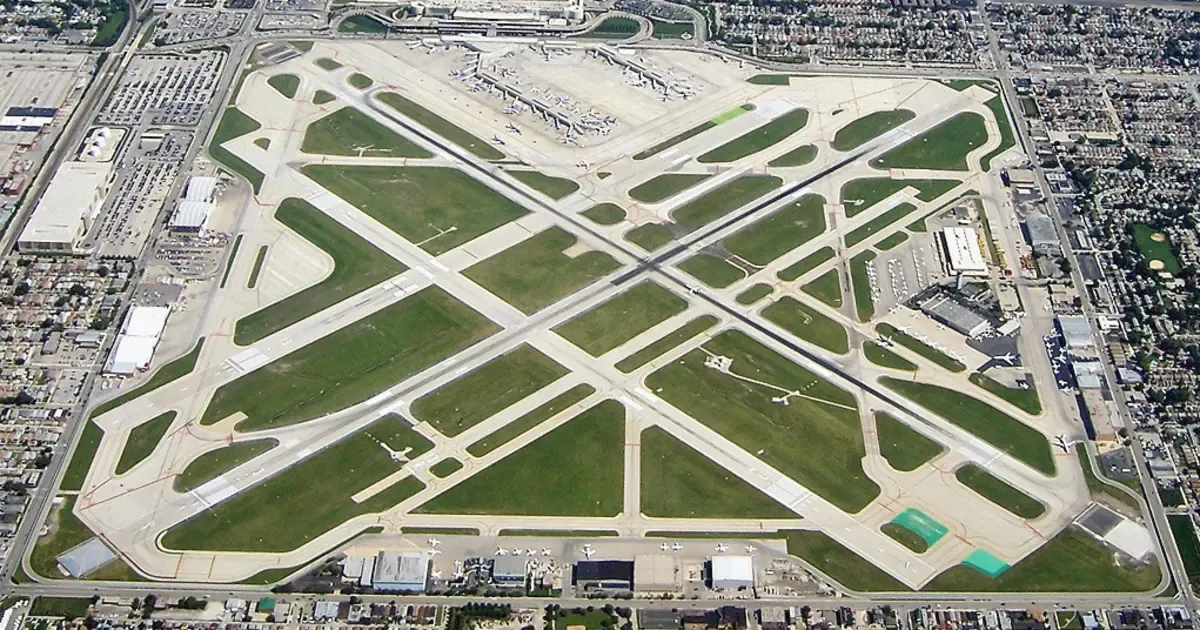
Quiet slots. The count of hours in a week where the checkpoint clears at 5 minutes or less. There are 168 hours in a week. Here’s where a few airports land:
| Airport | Quiet slots | Peak wait |
|---|---|---|
| MDW Chicago Midway | 127 | 19 min |
| DSM Des Moines | 123 | 10 min |
| IAD Washington Dulles | 119 | 19 min |
| MCI Kansas City | 109 | 34 min |
| BUF Buffalo | 97 | 33 min |
| JFK New York | 0 | 33 min |
Look at the bottom row. JFK’s peak wait is 33 minutes, which is genuinely middling — lower than Denver, lower than Miami, lower than Fort Lauderdale. By peak wait alone, JFK looks fine.
JFK is not fine. It has zero quiet hours. Not one hour in the entire week where the checkpoint drops to 5 minutes. Its calmest day, Monday, still averages 17.6 minutes across its busy hours.
What the two numbers actually tell you
Peak wait answers: how bad can this get?
Quiet-slot count answers: if I show up at a random hour, what am I walking into?
Those diverge more than you’d think. Kansas City is the clearest example. It has 109 quiet slots — three-quarters of the week is effectively empty — but a 34-minute spike on Monday at 1 PM that comes out of nowhere. Every other Monday hour that day is in the teens or lower. Tuesday’s worst hour is 14 minutes. Wednesday’s is 8.
So MCI is an easy airport with one landmine. That’s a completely different planning problem than JFK, which is a moderately hard airport with no easy hours at all. At MCI you check one thing: am I flying Monday afternoon? At JFK you accept that there is no clever hour and budget accordingly.
The Dulles case
The case for flying Dulles instead of Reagan National rests on this data. IAD: 119 quiet slots, peak of 19 minutes at 6 AM on Tuesday, and its worst day averages 5.9 minutes. DCA: 29 quiet slots, peak of 28 minutes, and it spikes at unpredictable hours — 2 PM Tuesday, 9 AM Friday, 1 PM and 3 PM Sunday.
Yes, Dulles is further from the city. Yes, the Silver Line takes forever. But you can walk into IAD 70 minutes before a flight on a random Thursday and be at the gate in twenty. You cannot reliably do that at National.
That trade — a longer ground trip for a checkpoint you don’t have to think about — is one I make every time, and it’s not close.
Where this actually changes a booking
Three situations:
Choosing between two nearby airports. Midway versus O’Hare is the textbook case. ORD’s peak is 30 minutes and it has 28 quiet slots. MDW’s peak is 19 with 127 quiet slots. If the fare difference is under a hundred dollars and the flight works, Midway wins on friction every time.
Booking a flexible trip. If you’re picking dates and times freely, a high quiet-slot airport gives you more good options. A low one means you’re competing for the same handful of workable slots as everyone else who read the same wait-time page.
Deciding how much buffer to build. At a 119-quiet-slot airport, a 90-minute connection is fine. At JFK, don’t go under two hours, and check the hourly page first.
The caveat
Quiet slots skew toward overnight hours at airports that close. Tallahassee has 83 of them, which sounds great until you notice most of them are between 1 AM and 4 AM when nothing departs. LaGuardia’s 42 quiet slots are almost entirely in the curfew window.
So the number is most useful when you compare it against airports of similar size and schedule. Midway’s 127 counts because Midway actually operates most of those hours. Des Moines’ 123 counts less, because Des Moines doesn’t have much of a night operation to begin with.
Read it as a ratio in your head: how many of these quiet hours are hours you would actually fly in? At Dulles the answer is most of them. At JFK the answer is moot.
How do the small airports score?
Very well, and it’s the clearest illustration of what this stat measures.
Chicago Midway logs 127 quiet hourly slots with a peak of 19 minutes. Des Moines logs 123 with a 10-minute peak. Washington Dulles logs 119 with a 19-minute peak. Kansas City logs 109 with a 34-minute peak. Cincinnati logs 104 with a 33-minute peak. Syracuse logs 100 with a 29-minute peak. Buffalo logs 97 with a 33-minute peak. Albany logs 87.
Then there’s Tallahassee, which logs 83 quiet slots and peaks at 120 minutes. That combination — enormous quiet count, enormous spike — is exactly what the two numbers together are designed to reveal. TLH is empty almost all week and then completely breaks on Friday morning.
Neither number alone tells you that. The peak makes Tallahassee look like the worst airport in the country. The quiet count makes it look like one of the best. Together they tell you the truth: it’s an easy airport with one catastrophic hour.
You can see the shape on the Tallahassee TSA wait times page.
What should I do with this number?
Use it to decide whether hour-shifting is worth your effort.
High quiet count, high peak — Tallahassee, Asheville, Ontario, Pensacola. Find the bad hours and book around them. The payoff is large: you go from a 60-minute queue to a walk-through.
High quiet count, low peak — Midway, Des Moines, Dulles, Cincinnati. Don’t think about it at all. Show up 75 minutes early and you’re fine.
Low quiet count, low peak — San Diego, Philadelphia, Dallas. Set a flat buffer and stop optimizing. There’s no better hour to find.
Low quiet count, high peak — Houston, Denver. Set a large flat buffer. These are the airports that genuinely require two and a half hours.
That’s four strategies, and the quiet-slot count is what tells you which one applies. It takes ten seconds to check and it changes what you do more than the peak number does.
Frequently asked questions
What is a quiet slot in airport wait-time data?
An hour of the week where the maximum recorded TSA wait is 5 minutes or less. There are 168 hours in a week, so an airport with 127 quiet slots is effectively empty three-quarters of the time.
Which US airport has the most quiet TSA hours?
Among major airports, Chicago Midway at 127, followed by Des Moines at 123 and Washington Dulles at 119. Among all airports in the data, several regional fields run higher.
Why does JFK have no quiet hours?
JFK runs international departure banks nearly around the clock, so there's no genuine overnight lull. Its lowest hours still sit in the double digits.
Is a low peak wait better than a high quiet-slot count?
They answer different questions. Peak wait tells you the worst case. Quiet-slot count tells you how likely you are to hit an easy hour if you're not picky about timing.
Sources
- Security Screening
Transportation Security Administration · tsa.gov
- Airline On-Time Performance Data
Bureau of Transportation Statistics · transtats.bts.gov
- Chicago Midway International Airport official website
Chicago Midway International Airport · flychicago.com
- John F. Kennedy International Airport official website
John F. Kennedy International Airport · jfkairport.com
Keep reading
 strategyORDMDW
The Second Airport Isn't Always the Shorter Line
Fort Lauderdale peaks at 69 minutes against Miami’s 46. Ontario beats LAX by 38. Here is when the alternate airport in your city actually saves you time.
FlyIndex Editorial strategyDENJFK
What Moving Your Flight One Hour Actually Saves You
At Denver, shifting one hour earlier cuts 30 minutes off the line. At JFK it saves four. The one-hour shift is worth wildly different amounts by airport.
FlyIndex Editorial strategyJFKLAX
How Early to Arrive: A Buffer Table for 20 US Airports
Two hours isn't a rule, it's an average of airports that behave nothing alike. Here's the buffer each one actually needs, built from real hourly data.
FlyIndex Editorial