Peak Hour vs. Busy Day: Which One Actually Ruins Trips
Everyone plans around the busy travel day. The data says the busy hour matters far more, and the two rarely land on the same part of the travel calendar.
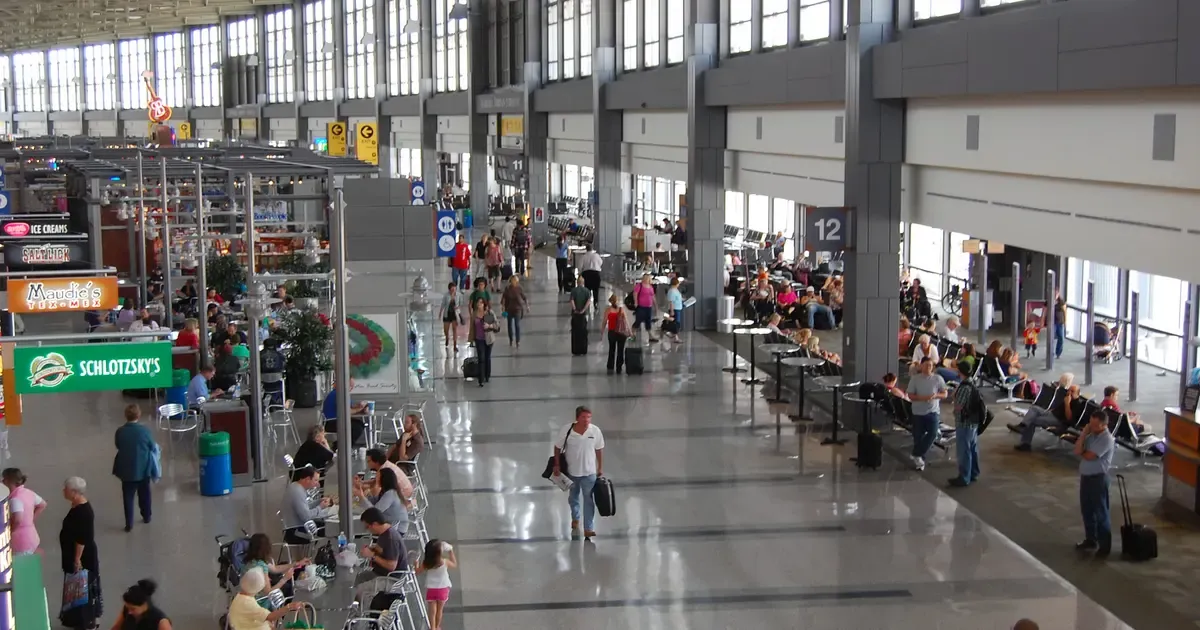
The single worst hour at LaGuardia is 49 minutes. The average across that same day is 17.7. If you plan around the day, you’re planning around a number that describes almost none of the hours in it.
This is the most common mistake I see in trip planning, and it’s an understandable one. Airlines publish busy-day forecasts. News outlets run “worst days to fly” pieces before every holiday. Nobody publishes a worst-hour list, so people optimize for the variable they can see.
Why does the daily average hide the problem?
Because averaging 17 hours of operation together buries the two that matter.
Take LaGuardia. The day-level numbers look like this: Monday 12.2, Tuesday 13.4, Wednesday 11.8, Thursday 9.8, Friday 13.6, Saturday 8.7, Sunday 17.7. Read that list and you’d conclude Sunday is moderately worse than Thursday and get on with your life.
Now look inside Sunday. The 2 PM hour hits 49 minutes. The 3 PM hour hits 43. The 6 PM hour hits 34. Three hours in the afternoon carry the entire day’s reputation, and the other fourteen hours are pulling the average down toward nine or ten minutes.
A traveler flying LaGuardia at 8 AM Sunday and a traveler flying at 2 PM Sunday are having completely different experiences at the same airport on the same day. The daily average describes neither of them.
Which airports have a peak problem and which have a floor problem?
This is the more useful way to sort airports, and it splits them into two categories that need opposite strategies.
Peak problem airports have a low baseline and a sharp spike. LaGuardia is the textbook case: a weekday ceiling of 29 minutes, a Saturday worst hour of just 22, and then that 49-minute Sunday afternoon. The airport logs 42 hourly slots at five minutes or under. There are plenty of good hours — you just have to avoid the specific bad ones.
Kansas City is even more extreme in this direction. MCI logs 109 quiet slots across the week, which is enormous. Tuesday’s worst hour is 14 minutes, Wednesday’s is 8, Friday’s is 9. The airport is essentially frictionless. And then Monday at 1 PM produces 34 minutes out of nowhere. One hour, once a week, and it’s the only hour that requires any planning at all.
Floor problem airports never get quiet. San Diego peaks at 34 minutes on Thursday at 4 PM, which is unremarkable. But SAN records only nine hourly slots at five minutes or under across the entire week, and its daily averages cluster tightly: Monday 15.5, Tuesday 14.5, Wednesday 16.4, Thursday 18.7, Friday 17.9, Saturday 15.3, Sunday 16.0.
There’s nowhere to hide at San Diego. Every hour is a 15-to-25-minute hour. You can’t dodge the peak because there isn’t really a peak — there’s just a permanently elevated baseline.
JFK is the purest version of this. It records zero hourly slots at five minutes or under. Not a low number. Zero. Its daily averages run 17.6 to 22.1, and its worst hour is 33 minutes on Sunday at 4 PM. The gap between JFK’s best and worst is smaller than the gap between LaGuardia’s Sunday morning and Sunday afternoon.
So which strategy should I use?
It depends entirely on which kind of airport you’re flying out of.
At a peak-problem airport, move your hour. The whole game is identifying the two or three bad hours and booking around them. At LaGuardia that means avoiding Sunday between 1 and 4 PM and avoiding the 6 AM weekday bump that tops out at 29 minutes. Do that and you’re flying an airport that behaves like a small regional field.
At a floor-problem airport, buy the buffer. There’s no clever hour to move to, so the only lever is arriving earlier. At San Diego, plan on 20 minutes at the checkpoint no matter when you fly, and stop trying to optimize it. At JFK, same — pick the flight that works for your schedule and give yourself the standard two hours.
The mistake is applying the wrong strategy to the wrong airport. Obsessive hour-shifting at JFK buys you almost nothing. Casually showing up whenever at LaGuardia on a Sunday afternoon costs you 40 minutes.
How do I tell which type my airport is?
Two numbers, and both are in the hourly data.
The quiet slot count. How many hours in the week drop to five minutes or under? A high number — Kansas City’s 109, LaGuardia’s 42 — means the airport has real escape hatches. A low number, like San Diego’s nine or JFK’s zero, means it doesn’t.
The spread between peak and average. LaGuardia’s Sunday peak of 49 against a 17.7 average is a spread of 31 minutes. San Diego’s Thursday peak of 34 against an 18.7 average is a spread of 15. The bigger the spread, the more a well-chosen hour is worth.
You can pull both from the hourly pages: LaGuardia, San Diego, Kansas City, JFK. Look at the hour-by-hour breakdown rather than the headline number.
Does the busy-day advice ever hold?
Around actual holidays, yes. The Wednesday before Thanksgiving and the Sunday after are genuinely different from a normal Wednesday and Sunday, because the volume is higher across every hour rather than concentrated in a few.
But for ordinary travel — which is most travel — the day matters far less than people think. The variance lives in the hour. Two flights on the same “bad” day can differ by 40 minutes of queue time, and no day-level forecast will tell you which one you booked.
The practical version
Before you book, do this in about ninety seconds.
Pull up the hourly TSA data for your departure airport. Find the two or three worst hours of the week. Check whether your flight puts you in the checkpoint during one of them. If it does and there’s a flight two hours earlier or later, take that one.
If the airport has no quiet hours — if the whole week sits in a narrow band — skip the optimization entirely and just add 20 minutes to your buffer. You’ve learned something more useful than a departure time: you’ve learned that this airport doesn’t reward cleverness.
For the arrival side of the equation, customs follows a different and much more concentrated pattern than security does, with almost every major airport peaking between 3 and 5 PM. CBP publishes its own wait-time data if you’re connecting off an international arrival.
Frequently asked questions
Is it better to avoid a busy travel day or a busy hour?
The hour, almost always. Daily averages compress the extremes — LaGuardia's Sunday average is 17.7 minutes, but the 2 PM hour inside that same day hits 49. Moving a flight three hours does more for you than moving it a day.
Which is the worst day to fly on average?
It varies by airport, and that's the point. At LaGuardia it's Sunday at 17.7 minutes average. At San Diego it's Thursday at 18.7. There's no universal bad day, which is why generic advice about avoiding Fridays doesn't hold up.
What does a 'quiet slot' mean in wait-time data?
It's an hour where the reported maximum wait drops to five minutes or under. Counting them across a week tells you whether an airport has genuine escape hatches or just varying degrees of busy.
How do I find the peak hour for my airport?
Check the hourly TSA wait-time page for your specific airport rather than relying on daily summaries. The hourly view is where the 40-minute spikes show up; day-level numbers average them away.
Sources
- CBP publishes its own wait-time data
U.S. Customs and Border Protection · cbp.gov
- Security Screening
Transportation Security Administration · tsa.gov
- Airline On-Time Performance Data
Bureau of Transportation Statistics · transtats.bts.gov
- La Guardia Airport official website
La Guardia Airport · laguardiaairport.com
Keep reading
 strategyJFKLAX
How Early to Arrive: A Buffer Table for 20 US Airports
Two hours isn't a rule, it's an average of airports that behave nothing alike. Here's the buffer each one actually needs, built from real hourly data.
FlyIndex Editorial strategyMDWJFK
The Quiet-Slot Count Is the Airport Stat Nobody Checks
Midway logs 127 hourly slots under five minutes. JFK logs zero. This one number tells you more about an airport than its headline peak wait ever will.
FlyIndex Editorial strategyTLHMDW
The Small Airport Advantage Is Real, But Not Where You Think
Small airports beat hubs on quiet hours, not on peak waits. Tallahassee peaks at 120 minutes. Here's how to read that tradeoff without getting it backwards.
FlyIndex Editorial