Six Months On, TSA Staffing Still Hasn't Fully Recovered
Wait times normalized by late April, but more than 1,000 officers resigned and new ones take up to six months to train. Here's what that means this autumn.
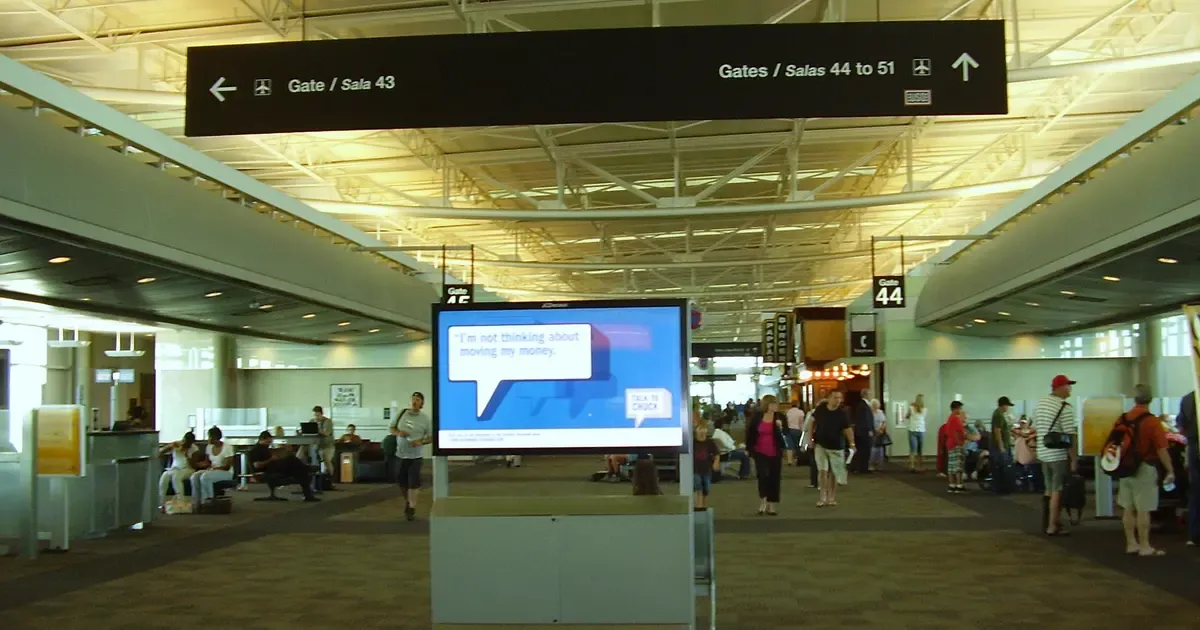
Airport security wait times in the United States have been normal since late April 2026. TSA’s workforce has not been. Those two facts have coexisted all summer, and understanding why is genuinely useful if you are booking autumn travel.
Where do things actually stand?
Wait times: back to typical levels at most major airports since late April, after officers received pay following the February funding lapse. Reporting through the spring described the recovery as real but gradual and uneven rather than uniform.
Headcount: worse than before. More than 1,000 TSA officers resigned in the wake of the February shutdown, on top of the 480-plus who quit during the lapse itself.
Pipeline: slow. The agency reported a four-to-six-month lag in recruitment and training. An officer hired in April is productive somewhere around August or September.
Residual risk: concentrated. Reporting in May indicated that occasional spikes remained possible at the airports that lost the most officers, specifically Atlanta and Houston Hobby.
A senior TSA official also warned publicly of lingering staffing and hiring challenges beyond the immediate crisis.
How can waits be normal if staffing isn’t?
Because normal demand and peak demand are different problems.
A checkpoint sized for an ordinary Tuesday can meet an ordinary Tuesday with fewer officers than it would like. What a thinner workforce costs you is surge capacity — the ability to open extra lanes when a bank arrives, when a flight cancels and rebooks 180 people at once, when weather compresses a day’s departures into three hours.
That is why the recovery looks complete in the averages and incomplete in the tails. Most days at most airports, you will not notice. On the bad day, the recovery is exactly what is missing.
It is also why the airports still flagged as risky are the ones that lost the most people rather than the ones with the highest volume.
What do the ordinary patterns look like now?
They look like they did before, which is the useful news.
Atlanta peaks at 45 minutes on Monday at 9 AM, with Monday 8 and 10 AM both at 34 and Saturday 10 AM at 29. It logs 34 hourly slots at five minutes or under across the week.
Houston Intercontinental peaks at 60 minutes on Sunday at 6 AM, with Sunday 5 AM at 55. It logs just 12 quiet hourly slots — one of the thinnest margins of any large US airport, before you account for anything that happened this year.
Those numbers describe the current baseline, and they are the right basis for planning an ordinary trip. The Atlanta and Houston hourly pages have the full breakdown.
What should I actually do differently this autumn?
Honestly, very little — with one exception.
For ordinary travel: use the hourly patterns. They are reliable again. If your airport has a high quiet-slot count, moving your flight two hours is still the cheapest optimization available. If it has a low one — Houston’s 12, LAX’s 10, JFK’s zero — set a flat buffer and stop optimizing.
For airports on the residual-risk list: add 20 minutes at Atlanta and Houston Hobby if you are travelling at a peak hour. That is a cheap hedge against the specific thing that might still go wrong there.
For any period of federal funding uncertainty: stop using historical wait data entirely. This is the exception, and it is the whole lesson of 2026. Pattern analysis assumes the system is staffed as designed. During a lapse it is not, and the relationship between “Monday at 9 AM” and “45 minutes” breaks within days.
The practical version: if you see news of a DHS funding fight, treat every checkpoint as unpredictable regardless of what its ordinary pattern says, and move your buffer to three hours.
The structural thing that hasn’t changed
TSA officers are still classified as essential personnel. In a future lapse they will again be required to work without pay, and the same sequence will follow — rising callouts, fewer open lanes, growing queues, resignations, and a training pipeline that cannot backfill for half a year.
Nothing about the 2026 episode changed that design. The recovery was fast because the cause was pay, and pay was restored. The cost was slow because the damage was people, and people take four to six months to replace.
That asymmetry is worth carrying into any prediction about the next one.
What I would watch
Not wait times. Headcount.
Wait times are a lagging, heavily-managed indicator that can look fine while surge capacity is thin. Officer headcount relative to pre-February levels is the number that tells you whether the system has actually recovered, and it is the one that will determine how the next disruption goes.
For your own trips, the highest-leverage moves remain unchanged: TSA PreCheck for domestic departures and Global Entry if you fly internationally, both of which route you around the standard lane that absorbs the worst of any staffing shortfall. Per-airport hourly baselines are on the FlyIndex airport pages.
Sources: The Hill, NPR, AirlineGeeks, Axios Atlanta, and TSA public statements during 2026.
How to read wait-time data after a disruption
One practical note, because this comes up whenever a system recovers from a shock.
Historical hourly patterns are built from observations. When a period of extreme disruption sits inside the observation window, it distorts the picture in both directions — it can inflate an airport’s apparent peak, or, if the data provider excluded the anomalous weeks, understate how bad things can get.
The right mental model is to treat the 2026 crisis as outside the pattern rather than part of it. Atlanta’s ordinary Monday-morning peak of 45 minutes tells you what a normal week looks like. It tells you nothing about what happens when a third of the workforce calls out, and it should not be expected to.
That is a general property of this kind of data, not a flaw in it. Pattern analysis answers the question “what usually happens at this hour.” It does not answer “what is the worst thing that could happen,” and conflating the two is how people end up with buffers that work fifty weeks a year and fail in the two that matter.
The one number that would change my advice
If TSA headcount returns to its pre-February level, the residual risk at Atlanta and Houston Hobby goes away and there is nothing special left to plan around.
Until then, those two airports carry a little more variance than their published patterns suggest, and the rest of the country is running with a thinner mobile reserve than it had a year ago. Neither of those facts should change an ordinary trip. Both are worth knowing if you are the person who books the tight connection.
Frequently asked questions
Are TSA wait times back to normal in August 2026?
At most airports, yes. Waits returned to typical levels in late April after officers were paid, and ordinary hourly patterns have held since. The recovery was reported as gradual and uneven rather than uniform.
Which airports are still at risk of spikes?
Reporting in May pointed to Atlanta and Houston Hobby as the airports that lost the most officers and therefore retain the most residual risk. Both were among the hardest hit during the February to April period.
How long does it take TSA to replace an officer?
Four to six months between hire and independent checkpoint work, according to the agency's own accounting during 2026. That lag is why a staffing loss in February was still a capacity constraint in the summer.
Should I change how much buffer I leave this autumn?
No, for ordinary travel. The hourly patterns are reliable again. The thing worth watching is federal funding news — if another lapse begins, historical wait data stops being predictive almost immediately.
Sources
- TSA PreCheck
Transportation Security Administration · tsa.gov
- Global Entry
U.S. Customs and Border Protection · ttp.cbp.dhs.gov
- TSA checkpoint travel numbers
Transportation Security Administration · tsa.gov
- Hartsfield Jackson Atlanta International Airport official website
Hartsfield Jackson Atlanta International Airport · atl.com
Keep reading
 newsATLIAH
The 2026 Shutdown Gave TSA Its Worst Waits on Record
A February funding lapse left 50,000 TSA officers unpaid and produced the longest security lines in the agency's history. Here's what the numbers actually were.
FlyIndex Editorial newsIAHDFW
TSA Warned It Wasn't Ready for the World Cup. Then What?
In March, TSA said new screeners would not be trained in time for the 2026 World Cup. By June it declared the operation a success. Both things can be true.
FlyIndex Editorial strategyORDMDW
The Second Airport Isn't Always the Shorter Line
Fort Lauderdale peaks at 69 minutes against Miami’s 46. Ontario beats LAX by 38. Here is when the alternate airport in your city actually saves you time.
FlyIndex Editorial