The 2026 Shutdown Gave TSA Its Worst Waits on Record
A February funding lapse left 50,000 TSA officers unpaid and produced the longest security lines in the agency's history. Here's what the numbers actually were.
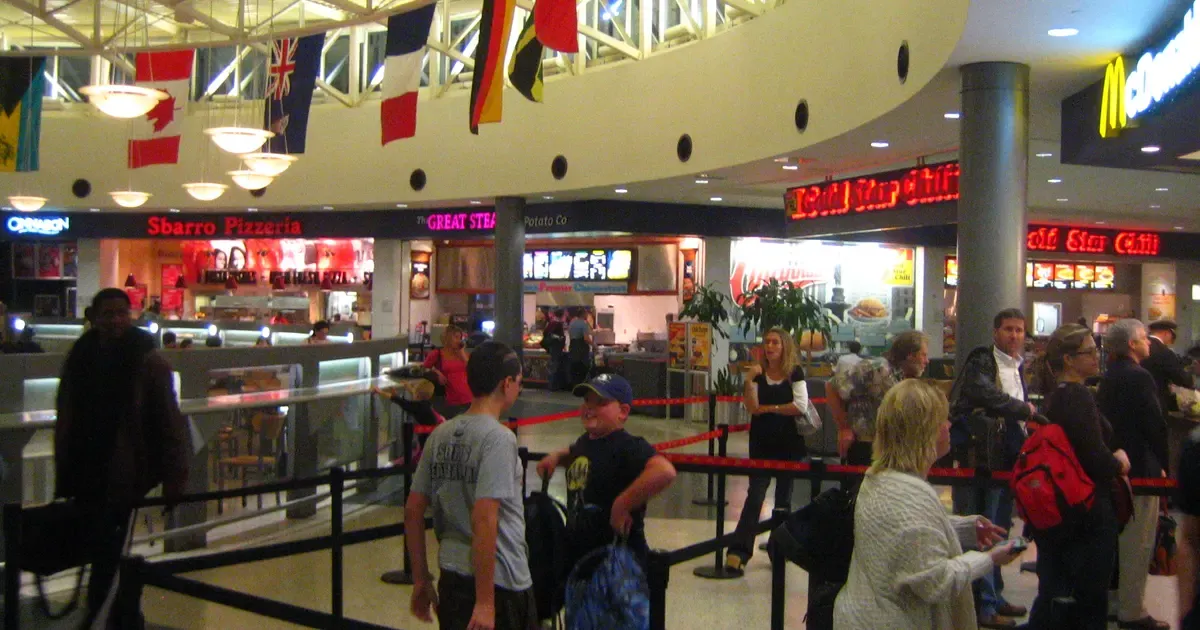
Between February and April 2026, American airport security produced the worst checkpoint waits in the Transportation Security Administration’s history. Some exceeded four and a half hours. This is what happened, with the numbers as they were reported at the time.
This story generated a lot of loose numbers. The figures below are drawn from the reporting listed at the end of this post.
What actually caused it?
A Department of Homeland Security funding lapse that began on February 14, 2026.
TSA screening officers are classified as essential personnel. That means during a funding lapse they are required to keep working, and they are not paid until the lapse ends. Roughly 50,000 officers were in that position, and by mid-March they had missed their first full paychecks.
The predictable thing happened. Callout rates climbed.
How bad did the staffing get?
This is the part that explains everything else.
Reporting from the period put callout rates at 40 to 50 percent at some major airports. More than half of TSA staff in Houston called out in a single week. Roughly a third called out at Atlanta and at New Orleans.
More than 480 transportation security officers quit during the funding lapse itself. That figure later grew — by May, reporting indicated more than 1,000 officers had resigned since the shutdown began.
A checkpoint is a throughput system with a hard ceiling set by how many lanes are staffed. Lose half your officers and you do not get half the throughput — you get a queue that grows for as long as passengers keep arriving faster than the remaining lanes can process them. That is the mechanism behind every number in the next section.
What were the actual waits?
Nationally: the longest in TSA history, with some checkpoints reported above four and a half hours.
Atlanta (ATL): Hartsfield-Jackson posted on social media telling travelers to arrive three hours early. Over the peak weekend of March 21–22, agents were reportedly telling passengers to expect waits as long as five hours. Lines of around 90 minutes were widely reported.
Houston: roughly two hours at one point on a Friday, with the worst callout rate in the country.
New Orleans (MSY): Louis Armstrong International advised passengers to arrive at least three hours before departure.
For scale, compare that to what these airports do in an ordinary week. FlyIndex’s own hourly data puts Atlanta’s normal peak at 45 minutes, on Monday at 9 AM. Houston Intercontinental’s normal peak is 60 minutes, on Sunday at 6 AM. A four-hour wait is not a bad day at these airports — it is four to five times their worst ordinary hour.
You can see the current baselines on the Atlanta TSA wait times and Houston TSA wait times pages.
How did it end?
The administration took executive action in late March to pay TSA officers, while Congress remained deadlocked on DHS funding.
The effect was fast, and it is the clearest evidence that this was a pay problem rather than a capacity problem. Once paychecks reached officers, callouts dropped, lanes reopened, and Atlanta reportedly went from multi-hour waits in March to a few minutes by early April. By late April, waits at most major airports were back to typical levels.
That recovery curve matters. A checkpoint crisis caused by staffing resolves almost immediately when staffing returns. A checkpoint crisis caused by insufficient lanes or equipment does not.
What did it leave behind?
Attrition, and a training pipeline that cannot be rushed.
New TSA officers require four to six months of training and onboarding. The officers who resigned in February and March could not be replaced in April, or May, or June. TSA warned in late March that new screeners would not be ready in time for the FIFA World Cup — a warning reported by Bloomberg and the Dallas Morning News on March 25.
As of May, reporting indicated occasional spikes remained possible at the airports that lost the most officers, specifically Atlanta and Houston Hobby.
What does this mean for how you plan a trip now?
Three things.
Ordinary patterns are back. The hourly wait-time patterns for a normal week are useful again, and they are what this site’s data reflects. Atlanta peaks Monday morning, Houston peaks Sunday pre-dawn, and neither is producing anything like March’s numbers.
The tail risk is different from the average. What the shutdown demonstrated is that checkpoint waits have a very long tail when staffing breaks. No amount of hourly-pattern analysis predicts a 4.5-hour wait, because that event is not in the pattern — it is outside it.
Buffer for the system, not just the line. If you are flying during any period of federal funding uncertainty, the historical wait data is the wrong tool. Watch the news, not the pattern.
The honest caveat about these numbers
Wait times during the crisis were reported by a mix of airports, airlines, journalists and passengers, and they varied enormously by hour and terminal. The “four and a half hours” figure represents extreme observations rather than a typical experience, and a traveler at the same airport three hours later might have walked through in twenty minutes.
That variance is itself the story. A functioning checkpoint is predictable. An understaffed one is not, and unpredictability is what actually makes people miss flights.
For current conditions, TSA publishes its own guidance, and the hourly baselines for individual airports are on their FlyIndex airport pages.
Sources: NPR, Bloomberg, The Atlanta Journal-Constitution, Axios Atlanta, The Hill, AirlineGeeks, and Hartsfield-Jackson Atlanta International Airport’s own public advisories.
Frequently asked questions
How long did TSA lines actually get during the 2026 shutdown?
Reporting from the period described the longest waits in TSA history, with some checkpoints exceeding four and a half hours. Atlanta and Houston both saw roughly two-hour waits on at least one Friday, and Atlanta's airport publicly advised a three-hour arrival buffer.
Why did the lines get so long?
Officers were required to keep working without pay, and callout rates climbed sharply — reported at 40 to 50 percent at some large airports. Fewer screeners meant fewer open lanes, and a checkpoint that loses half its staff cannot absorb a normal departure bank.
When did wait times return to normal?
Late April 2026, after officers received pay. Atlanta reportedly fell from multi-hour waits in March to a few minutes by early April once back pay arrived and lanes reopened.
Could it happen again?
The mechanism is still there — TSA officers are classified as essential and work unpaid during a lapse. The lasting damage is attrition: more than a thousand officers resigned, and replacing them takes four to six months of training.
Sources
- TSA publishes its own guidance
Transportation Security Administration · tsa.gov
- TSA checkpoint travel numbers
Transportation Security Administration · tsa.gov
- Hartsfield Jackson Atlanta International Airport official website
Hartsfield Jackson Atlanta International Airport · atl.com
- George Bush Intercontinental Houston Airport official website
George Bush Intercontinental Houston Airport · fly2houston.com
Keep reading
 newsATLIAH
Six Months On, TSA Staffing Still Hasn't Fully Recovered
Wait times normalized by late April, but more than 1,000 officers resigned and new ones take up to six months to train. Here's what that means this autumn.
FlyIndex Editorial newsIAHDFW
TSA Warned It Wasn't Ready for the World Cup. Then What?
In March, TSA said new screeners would not be trained in time for the 2026 World Cup. By June it declared the operation a success. Both things can be true.
FlyIndex Editorial strategyCLTDFW
How to Pick a Connecting Hub Using Real Wait-Time Data
Charlotte, Dallas and Atlanta connect to most of the same places. Their checkpoint and customs numbers are wildly different. Here's how to pick between them.
FlyIndex Editorial