MIA Runway Closures: What Ground Delays Mean This Week
MIA has two of four runways closed Sept 8 with FAA averaging 3h31m ground delays. Your TSA line isn’t the risk — late inbound aircraft is. Here’s what to do.
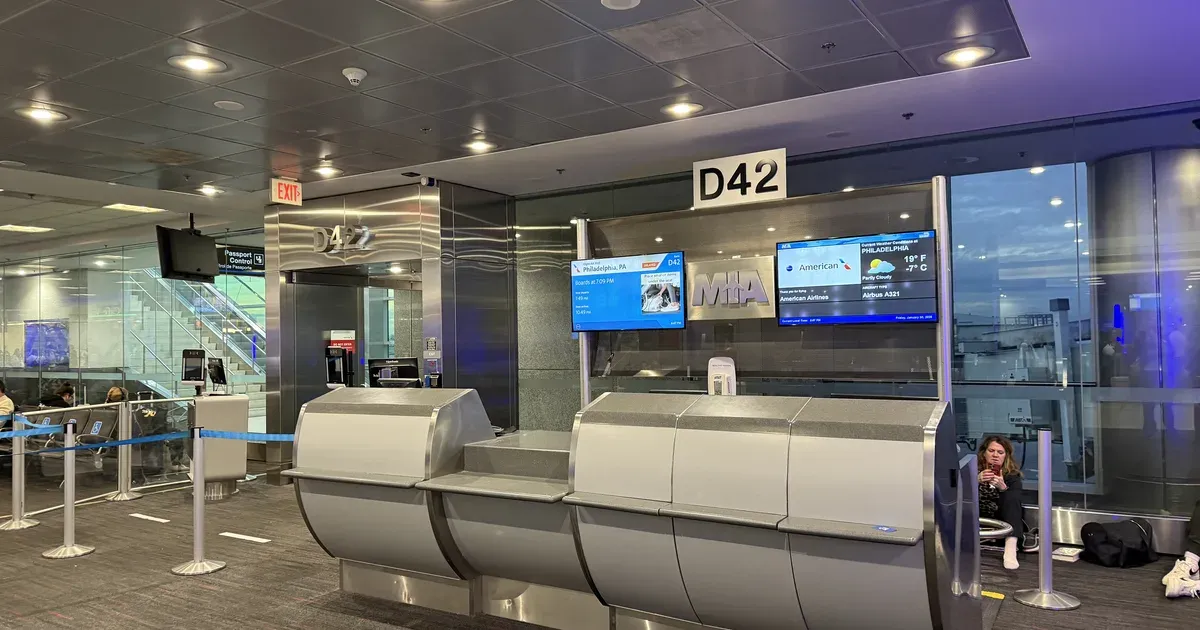
If you’re flying through Miami this week, assume your flight is the problem, not the checkpoint. As of the afternoon of Sept 8, two of MIA’s four runways remain closed after Sunday’s cargo-jet overrun, and the FAA has a Ground Delay Program in force averaging 3 hours 31 minutes with a maximum of 14 hours 34 minutes.
What happened at MIA on Sunday?
On Sunday Sept 6 at about 2 p.m., Prime Air Flight 7598, a Boeing 767-300 freighter inbound from San Juan and operating for Amazon Air, overran MIA’s northwest diagonal runway, left the airfield and hit vehicles on a road near the cargo facilities. Five people on the ground were killed and five more were hospitalised.
The NTSB has opened an investigation and recovered the flight and voice recorders. No cause has been determined and none should be assumed. There is nothing here a traveller can usefully act on yet, and guessing at it only adds noise.
What matters for this week is concrete and still live two days later. MIA’s own traveller advisory on Sept 8 says: ‘Two of MIA’s four runways remain closed. Cancellations continue due to aircraft and flight crews not having arrived.’ The FAA’s national airspace status feed that same afternoon listed a Ground Delay Program at MIA for ‘disabled aircraft on the runway,’ averaging 3 hours 31 minutes and stretching to a maximum of 14 hours 34 minutes. On the first full day after the accident, FlightAware counted 129 delayed and 65 cancelled domestic flights at MIA.
Those last numbers will move. Treat them as a snapshot, not a forecast.
Why isn’t the checkpoint the problem this week?
A ground delay program doesn’t make the checkpoint slower. It holds inbound planes at their origin airports until Miami has room to take them, so the delay lands on arrivals first and then ripples to departures when the aircraft and crew never show.
That’s the mechanism behind MIA’s wording. Cancellations continue due to aircraft and crews not having arrived. Honestly, that one line tells you more than any wait-time chart right now.
According to FlyIndex’s historical TSA data for MIA, the security peak reaches 46 minutes on Mondays at 12 PM. The airport logs 29 quiet slots in a typical week, with the very calmest hours bunched overnight at 1 AM, 12 AM and 2 AM — useless for most departures, but proof the checkpoint breathes when the banks clear. My read is simple: keep using that 46-minute Monday peak as your curb plan. Don’t throw it out because the runway picture looks scary, and don’t pad it to three hours hoping you’ll somehow beat a ground delay. The line didn’t cause this and clearing it early won’t pull your plane in faster.
International arrivals are a different clock. FlyIndex’s immigration data for MIA peaks at 74 minutes on Sundays at 3 PM, so if you’re landing from abroad into this mess, customs plus a rebook line is where the afternoon goes.
Should you still plan for a long security line?
Yes. Keep the normal buffer, don’t invent a new one.
If you’re departing Monday around midday, I’d plan on that 46-minute worst case from FlyIndex’s data, plus bag drop and a gate walk across MIA’s 5 terminals. That’s a two-hour curb arrival for a checked bag, ninety minutes if you’re carry-on only and already checked in. It feels almost boring to say when the FAA is quoting 3 hours 31 minutes average and 14 hours 34 minutes maximum, but those two clocks don’t stack. One gets you through screening. The other decides whether your plane leaves.
MIA runs 5 terminals with 107 restaurants and 133 shops, so a normal buffer doesn’t strand you with nothing to do if you’re early — and you’ll want to be inside, past security, where you can hear gate changes and get in the rebook queue first if your flight drops.
My Monday split looks like this:
| If you fly… | Be at the curb… | What that covers |
|---|---|---|
| Monday 10 AM - 2 PM, checked bag | 2 hours early | the full 46-minute peak plus bag cutoff |
| Monday 10 AM - 2 PM, carry-on only | 90 minutes early | screening plus the long concourse walk |
| Early morning or late evening | 90 minutes early | thinner checkpoint, but rebook lines build fast |
Check the MIA TSA wait times page the morning you fly. You’re confirming the noon Monday pattern holds on your day, not looking for permission to arrive 45 minutes before boarding.
One caveat. If your inbound aircraft is already listed late before you leave home, extra checkpoint padding doesn’t help. Go early enough to be rebookable, not earlier.
What actually helps if you’re connecting through Miami?
A longer layover helps. Everything else is kind of noise.
Don’t book a tight 45-minute connection through MIA this week if you have any choice, because a ground delay eats short connections first and there aren’t spare aircraft sitting around to rescue a misconnect. For what it’s worth, I’d take a nonstop at a slightly awkward hour over a cheap one-stop through Miami right now, and if Miami is unavoidable I’d pick the itinerary with two or three hours on the ground. Boring. Effective.
If you’re already ticketed through MIA, watch the inbound. Your airline app shows where your plane is coming from — if that aircraft spent the night somewhere else under last night’s delay program, your outbound is already wobbling before crew scheduling admits it. Have a backup in mind before you get to the airport, know whether your fare lets you stand by, and keep your bag carry-on size if you can swing it so a re-route doesn’t mean chasing luggage.
Once you’re in Miami, stay inside. Don’t step out for food or a smoke and re-clear. With 107 restaurants and 133 shops past security across the airport, you’ve got options airside, and the gate area is where you’ll hear the rebook offer first. No sandwich fixes a cancelled departure, but being at the gate when they ask for reroute volunteers beats queueing at the Miami International Airport checkpoint a second time.
How do you check whether your flight is caught in it?
Start with your airline, then cross-check the two official feeds.
Your airline’s app is the only place that can rebook you, so that’s home base. Then glance at MIA’s traveller advisory banner for the runway status — as of Sept 8 it still flags two closed runways and crew-related cancellations — and at the FAA national airspace status feed for whether the MIA Ground Delay Program is still active and what average it’s quoting. Those FAA averages move through the day as traffic and weather shift, so don’t treat 3 hours 31 minutes as locked.
If your flight shows a ground hold at origin, don’t rush to the airport to wait it out there. Wait where you have food, power and options. If your flight shows cancelled for lack of aircraft, act fast in the app rather than joining the longest phone queue in the terminal.
The checkpoint math hasn’t changed. The runway math has. If your plane never made it to Miami, no amount of PreCheck closes that gap.
Frequently asked questions
Is Miami airport open after the cargo jet overrun?
Yes, but constrained. On Sept 8 MIA says two of its four runways remain closed and cancellations continue because aircraft and crews never arrived. Expect late inbound aircraft, long ground delays averaging 3 hours 31 minutes, and departures that cancel when the plane is stuck elsewhere.
Will TSA security take longer at MIA this week?
No reason to expect so. According to FlyIndex data the MIA checkpoint peaks at 46 minutes Mondays at 12 PM, with 29 quiet slots in a typical week. Keep the normal two-hour curb arrival for a checked bag. The delay program affects runways and arrivals, not screening speed.
How early should I get to MIA for a Monday midday flight?
Two hours before departure with a checked bag, 90 minutes with carry-on and mobile boarding pass. That covers the 46-minute Monday noon peak plus bag drop and gate walk. Arriving three or four hours early will not pull an aircraft held under a ground delay in any faster.
Should I connect through MIA or rebook another way?
If you have a clean nonstop or a connection avoiding MIA at a similar price, take it this week. If you must connect through Miami, pick the longest layover you can tolerate, stay inside security once through, and watch your inbound aircraft in the airline app — a late inbound is the first sign your outbound slips.
Sources
- FAA National Airspace System Status
Federal Aviation Administration · nasstatus.faa.gov
- Miami International Airport traveller advisory
Miami-Dade Aviation Department · miami-airport.com
- Delays, cancellations continue at MIA following Amazon cargo plane crash that killed 5 people
WPLG Local 10 · local10.com
Keep reading
 newsALOORD
ALO Shut Sept 8-22: How to Reroute Through ORD Smoothly
Waterloo ALO is closed Sept 8-22, 2026 with American flights paused. ORD reroutes face a 30-min Sunday TSA peak and 78-min immigration high — plan here.
FlyIndex Editorial terminalsMIA
How to Read MIA's Layout Before You Land: 5 Terminals
MIA has 5 terminals with 107 restaurants and 133 shops. Learn where TSA hits 46 minutes and immigration hits 74, and how to walk it without backtracking.
FlyIndex Editorial terminalsMIAORD
Know Your MIA Terminal Before You Leave for the Airport
MIA runs 5 terminals with a 46-minute Monday noon TSA peak. Verify your airline terminal before leaving and use ORD's 4-terminal contrast to plan curb to gate.
FlyIndex Editorial