Reagan National Peaks Tuesday Afternoon, Not Monday Morning
DCA tops out at 28 minutes on Tuesday at 2 PM, on a business-travel pattern unlike any other hub. Here's the full week and how to plan an arrival time.
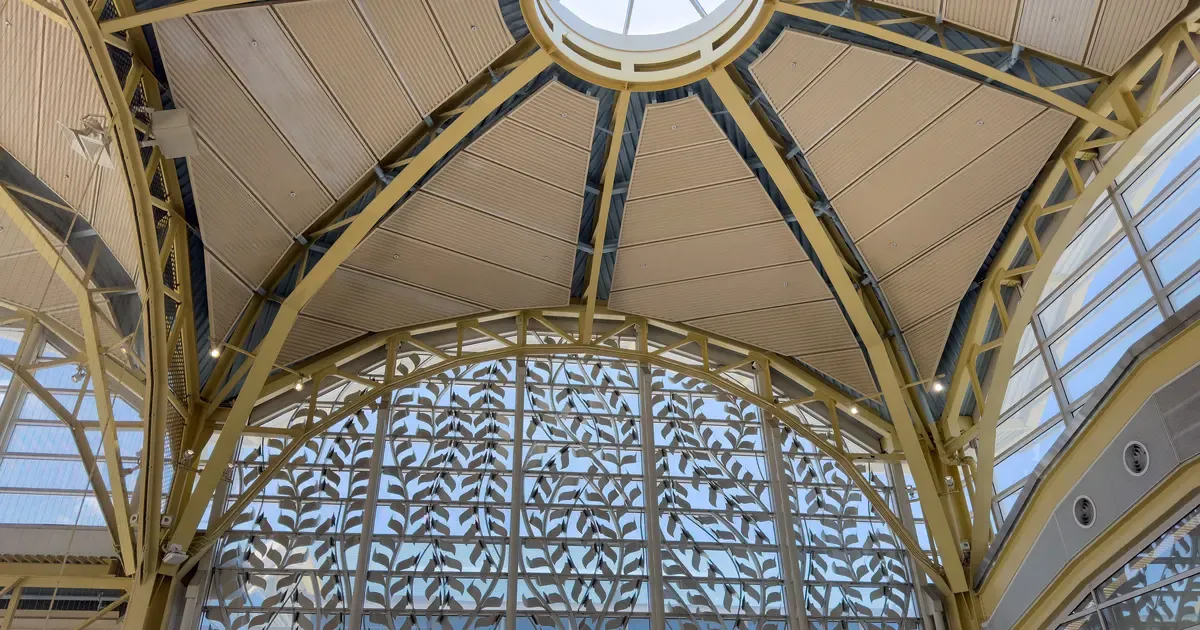
Reagan National’s worst security hour is Tuesday at 2 PM. Not Monday at 6 AM, not Friday evening — Tuesday, mid-afternoon, at 28 minutes.
That’s a small number in absolute terms. What makes it interesting is that DCA’s whole week is organized around a rhythm you won’t find at any other major airport, and it comes straight from how Washington works.
What does the DCA week look like?
Worst hour by day:
Tuesday: 2 PM, 28 minutes. Also 7 AM at 25 and 4 PM at 23. Sunday: 1 PM and 3 PM, 26 minutes each. Friday: 9 AM, 25 minutes. Monday: 5 AM, 23 minutes. Thursday: 7 AM, 23 minutes. Saturday: 6 AM and 10 AM, 18 minutes each. Wednesday: 4 PM, 14 minutes.
The ceiling is 28 minutes. The floor across the week is Wednesday’s 14. That’s a 14-minute spread between the worst day and the best, which is remarkably tight for an airport handling this much traffic.
DCA logs 29 hourly slots at five minutes or under, which is moderate. The checkpoint has quiet windows but not many.
Why Tuesday?
The congressional calendar, more or less.
A large share of Washington business travel runs on a Tuesday-to-Thursday rhythm. Congress is typically in session midweek, which drives the schedules of everyone who does business with it — lobbyists, trade associations, agency contractors, journalists, consultants. That means the outbound wave isn’t Monday morning; it’s Tuesday, after the first round of meetings.
Look at Tuesday’s shape: 25 minutes at 7 AM, 28 at 2 PM, 23 at 4 PM. Elevated across the day rather than spiked in one hour. That’s what a distributed business-travel day looks like.
Thursday’s 7 AM figure of 23 minutes is the return wave starting. Friday at 9 AM at 25 is the rest of it.
And Wednesday, sitting in the middle of the week when everyone is already where they need to be, tops out at 14.
How early should I arrive at DCA?
Any day, any hour: 90 minutes is comfortable. The 28-minute ceiling plus the walk to a gate — and DCA’s gates are close — leaves real margin.
Wednesday or Saturday: 75 minutes works. The peaks are 14 and 18 respectively.
Tuesday afternoon: 90 minutes, and don’t trim it. That’s the one window where you’ll actually see the ceiling.
Checking bags: two hours, because the bag drop is the variable rather than the checkpoint.
The Reagan National TSA wait times page has the hourly detail if you want to check your specific departure.
One thing that helps at DCA specifically: the terminal is compact and the walk from security to any gate is short. The checkpoint time is nearly your whole airside timeline, which is not true at a sprawling airport.
Should I fly out of Dulles instead?
On the security numbers alone, yes, and it’s not close.
Dulles peaks at 19 minutes, on Tuesday at 6 AM. It logs 119 hourly slots at five minutes or under — one of the highest quiet-hour counts of any large US airport. That’s a checkpoint you can walk through at most hours of most days.
DCA’s 28-minute peak with 29 quiet slots looks distinctly worse by comparison.
But the checkpoint is not the deciding factor for anyone choosing between these two airports. Reagan National is on the Metro, minutes from downtown, and you can be at your gate 40 minutes after leaving a meeting on Capitol Hill. Dulles is 26 miles out, and even with the Silver Line extension the trip is an hour or more from most of the city.
So: Dulles saves you nine minutes at the checkpoint and costs you 45 on the ground. The Dulles TSA wait times page is worth comparing if your origin is in the Virginia suburbs, where the ground math changes completely.
What about the perimeter rule?
Worth knowing if you’re planning a trip, because it shapes what DCA can even offer.
Reagan National operates under a perimeter rule that limits most flights to 1,250 miles, with a small number of beyond-perimeter exemptions. That means West Coast service out of DCA is limited, and a lot of transcontinental itineraries route through Dulles or connect elsewhere.
Practically, this affects the security picture too. DCA’s traffic is heavily short-haul domestic business travel, which is exactly the passenger mix that produces the Tuesday-afternoon pattern rather than a leisure-heavy weekend one.
The DCA airport guide covers the terminal layout and the Metro connection.
What’s the terminal situation?
DCA’s Terminal 2 (the newer building, formerly Terminals B and C) handles most traffic and has the better food and shopping. Terminal 1 is smaller and older.
The National Hall connector was rebuilt to consolidate security screening, which is part of why the checkpoint numbers are as stable as they are — a consolidated checkpoint with more lanes absorbs a surge better than several small ones.
If you’re connecting at DCA, which is unusual but happens, the walk between piers is manageable and doesn’t require re-clearing.
The rule for Reagan National
Ninety minutes, always. Seventy-five if it’s Wednesday.
That’s a genuinely easy airport by hub standards, and the compact terminal means the buffer you set is almost entirely checkpoint time rather than walking time.
If you’re a regular DCA traveler on the Tuesday-Thursday circuit, TSA PreCheck is worth having — not because the standard line is bad, but because you’ll hit the Tuesday afternoon window repeatedly and the PreCheck lane is consistently short there.
For arrivals and ground transport, the DCA arrival guide covers the Metro, rideshare and rental car situation, which at this airport is simpler than at almost any comparable hub.
Frequently asked questions
What is the busiest TSA hour at Reagan National?
Tuesday at 2 PM, at 28 minutes. Tuesday at 7 AM runs 25 and Sunday at 1 and 3 PM both run 26. No hour at DCA exceeds 28.
How early should I arrive at DCA?
Ninety minutes covers any departure, since the checkpoint never exceeds 28 minutes. Seventy-five works on a Wednesday or Saturday if you're not checking bags.
Is Reagan National or Dulles faster for security?
Dulles, clearly. IAD peaks at 19 minutes and logs 119 hourly slots at five minutes or under, against DCA's 28-minute peak and 29 quiet slots. The tradeoff is that Dulles is much farther from downtown.
Why does DCA peak on Tuesday afternoon?
Washington's business travel rhythm. A lot of DC trips run Tuesday to Thursday, which puts the outbound wave on Tuesday afternoon rather than Monday morning. It's a congressional-calendar pattern more than a conventional commuting one.
Sources
- TSA PreCheck
Transportation Security Administration · tsa.gov
- TSA checkpoint travel numbers
Transportation Security Administration · tsa.gov
- Ronald Reagan Washington National Airport official website
Ronald Reagan Washington National Airport · flyreagan.com
- Washington Dulles International Airport official website
Washington Dulles International Airport · flydulles.com
Keep reading
 strategyORDMDW
The Second Airport Isn't Always the Shorter Line
Fort Lauderdale peaks at 69 minutes against Miami’s 46. Ontario beats LAX by 38. Here is when the alternate airport in your city actually saves you time.
FlyIndex Editorial securitySYR
Syracuse TSA Peaks at 29 Minutes and Never Gets Worse
SYR logs 100 quiet hourly slots and tops out at 29 minutes on Friday morning. Here's the weekly pattern and the arrival buffer that actually makes sense.
FlyIndex Editorial securityCVG
Cincinnati Has 104 Quiet TSA Hours and One Bad Morning
CVG peaks at 33 minutes on Sunday at 6 AM and is nearly empty the rest of the week. Here's the hourly pattern and the buffer that actually makes sense.
FlyIndex Editorial