Philadelphia's TSA Ceiling Is Only 25 Minutes. Here's Why
PHL never exceeds 25 minutes at any hour of the week, a rare flat profile for a hub. Here's the pattern and what that predictability means for your buffer.
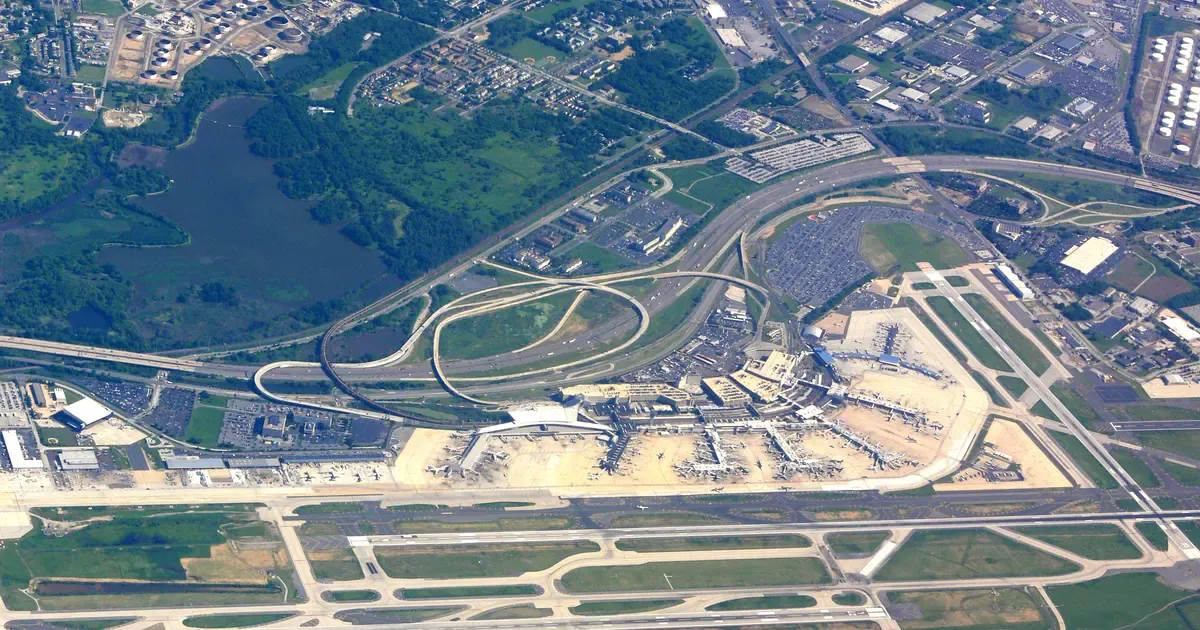
Philadelphia International never produces a security wait above 25 minutes. Not on a Friday morning, not on a Sunday afternoon, not during the summer peak. Twenty-five minutes is the ceiling, and four different hours of the week hit it exactly.
For a hub handling this much traffic, that’s a genuinely unusual profile — and it’s more useful than a lower average would be.
What does the PHL week look like?
Worst hour by day:
Friday: 7 AM and 5 PM, 25 minutes each. Sunday: noon and 4 PM, 25 minutes each. Thursday: 4 AM, 22 minutes. Monday: 7 AM, 22 minutes. Wednesday: 7 PM, 21 minutes. Saturday: 4 AM, 21 minutes. Tuesday: 7 AM and 5 PM, 17 minutes each.
The spread between the best day and the worst is eight minutes. Eight. At most hubs that gap is 20 or 30.
The airport logs 22 hourly slots at five minutes or under, which is on the low side. That’s the tradeoff — PHL doesn’t get bad, but it doesn’t get empty either.
Why is Philadelphia so flat?
Because it’s a well-designed checkpoint operation running below its capacity ceiling.
The mechanics that produce a spike are always the same: demand arrives faster than lanes can process it, and the queue builds until the bank clears. That requires either a very concentrated arrival pattern or a lane count that can’t flex.
Philadelphia has neither problem. Its departure banks are spread across the day rather than concentrated in one or two, and the checkpoint has enough lanes to open into demand rather than being pinned at maximum.
Note the double peaks on Friday and Tuesday — 7 AM and 5 PM, morning and evening business travel. Those are the two heaviest hours, and even together they only reach 25 minutes.
Is a flat profile actually good?
For planning, yes. Better than a low average with a spike.
Consider two airports. Airport A averages eight minutes and peaks at 70. Airport B averages 18 minutes and peaks at 25.
Airport A is faster most of the time. But you can’t plan around it, because the difference between your expectation and reality can be an hour. You either budget for the peak and waste time six days a week, or you budget for the average and miss a flight on the seventh.
Airport B costs you 18 minutes every time. You budget 25, you’re always right, and you never think about it again.
Philadelphia is Airport B. Tallahassee, with a 120-minute peak and 83 quiet hourly slots, is Airport A.
How early should I arrive at PHL?
Domestic departure, any day, any hour: 90 minutes. The 25-minute ceiling plus the walk to a gate leaves plenty of margin.
Checking bags: two hours, because the bag drop is the variable rather than the checkpoint.
International departure: two to two and a half hours, per the airline’s requirement rather than the security data.
Friday morning or Sunday afternoon: still 90 minutes, but don’t cut it to 75. Those are the four hours that actually reach the ceiling.
Check the Philadelphia TSA wait times for your specific hour if you want to confirm. The pattern is stable, which is the whole point of this airport.
How does PHL compare to other East Coast hubs?
Favorably on predictability, unremarkably on speed.
Boston peaks at 19 minutes on Thursday at 5 PM, with 34 quiet hourly slots. That’s both a lower ceiling and a lower floor than Philadelphia. Boston is the better checkpoint on the numbers.
Charlotte peaks at 25 minutes on Thursday at 2 and 3 PM, with 35 quiet slots. Essentially the same ceiling as PHL with more quiet hours.
JFK peaks at 33 minutes on Sunday at 4 PM with zero quiet slots and daily averages of 17.6 to 22.1. Higher ceiling, higher floor.
LaGuardia peaks at 49 minutes on Sunday at 2 PM but logs 42 quiet slots. A much worse peak with much more quiet around it.
Newark doesn’t appear in the TSA set with comparable coverage, so there’s no fair comparison to make.
Philadelphia sits in the middle of the pack on speed and near the top on consistency. You can compare hour by hour on the Boston, Charlotte and LaGuardia pages.
What about international arrivals?
The customs side is a different story and worth planning separately.
PHL’s immigration peak is 50 minutes, hitting on Friday at 3 PM and Sunday at 3 PM. Monday runs 40 at 3 and 4 PM.
That’s the same range as Charlotte at 52, Boston at 52 and Houston at 50 — well below the coastal gateways, which run 74 to 79. Philadelphia is a reasonable place to re-enter the country.
For a connection, the combination is genuinely favorable: a 50-minute customs peak followed by a security re-clear that will never exceed 25 minutes. That’s a more predictable sequence than at Houston, where the customs peak is the same but the checkpoint can hit 60.
The PHL immigration wait times page has the hourly view. Global Entry still helps during the Friday and Sunday afternoon peaks, though the case is less overwhelming here than at JFK.
What actually costs you time at Philadelphia?
Not the checkpoint. The terminal geography.
PHL’s terminals A through F stretch along a single spine, and the walk from Terminal A-West to Terminal F is substantial. If your connection crosses that distance, the walk is the constraint, not security.
Terminal F in particular is served by a shuttle from the main terminals, which adds a step. Check which terminal your gate is in before you assume a 45-minute connection is comfortable.
The Philadelphia airport guide covers the terminal layout, and the arrival guide has ground transport if you’re landing rather than connecting. For what you can bring through the checkpoint, TSA’s screening guidance is the reference.
The rule for PHL
Ninety minutes, always. The checkpoint will not surprise you.
That’s a genuinely rare thing to be able to say about a major hub, and it’s the most useful fact about this airport.
Frequently asked questions
What is the busiest TSA hour at Philadelphia airport?
There's a four-way tie at 25 minutes: Friday at 7 AM, Friday at 5 PM, Sunday at noon, and Sunday at 4 PM. No hour of the PHL week exceeds that.
How early should I arrive at PHL?
Ninety minutes for a domestic departure covers it comfortably, because the checkpoint never exceeds 25 minutes. Two hours if you're checking bags or departing internationally.
Is Philadelphia a good airport for security?
It's one of the most predictable. The 25-minute ceiling is low for a hub of this size, though the floor is high — only 22 hourly slots drop to five minutes or under, so you'll almost always wait something.
How long is customs at Philadelphia?
Fifty minutes at peak, on Friday at 3 PM and Sunday at 3 PM. Monday runs 40 at 3 and 4 PM. That puts PHL in the same range as Charlotte, Boston and Houston.
Sources
- Global Entry
U.S. Customs and Border Protection · ttp.cbp.dhs.gov
- TSA's screening guidance
Transportation Security Administration · tsa.gov
- TSA checkpoint travel numbers
Transportation Security Administration · tsa.gov
- Philadelphia International Airport official website
Philadelphia International Airport · phl.org
Keep reading
 securitySYR
Syracuse TSA Peaks at 29 Minutes and Never Gets Worse
SYR logs 100 quiet hourly slots and tops out at 29 minutes on Friday morning. Here's the weekly pattern and the arrival buffer that actually makes sense.
FlyIndex Editorial securityCVG
Cincinnati Has 104 Quiet TSA Hours and One Bad Morning
CVG peaks at 33 minutes on Sunday at 6 AM and is nearly empty the rest of the week. Here's the hourly pattern and the buffer that actually makes sense.
FlyIndex Editorial securityDCAIAD
Reagan National Peaks Tuesday Afternoon, Not Monday Morning
DCA tops out at 28 minutes on Tuesday at 2 PM, on a business-travel pattern unlike any other hub. Here's the full week and how to plan an arrival time.
FlyIndex Editorial