ORD vs LAX in Peak Season: 28 Quiet Hours Against 10
ORD security tops out at 30 minutes on Sunday at 3 PM; LAX at 25. The gap that matters this Labor Day is quiet hours: 28 at O'Hare, 10 at LAX.
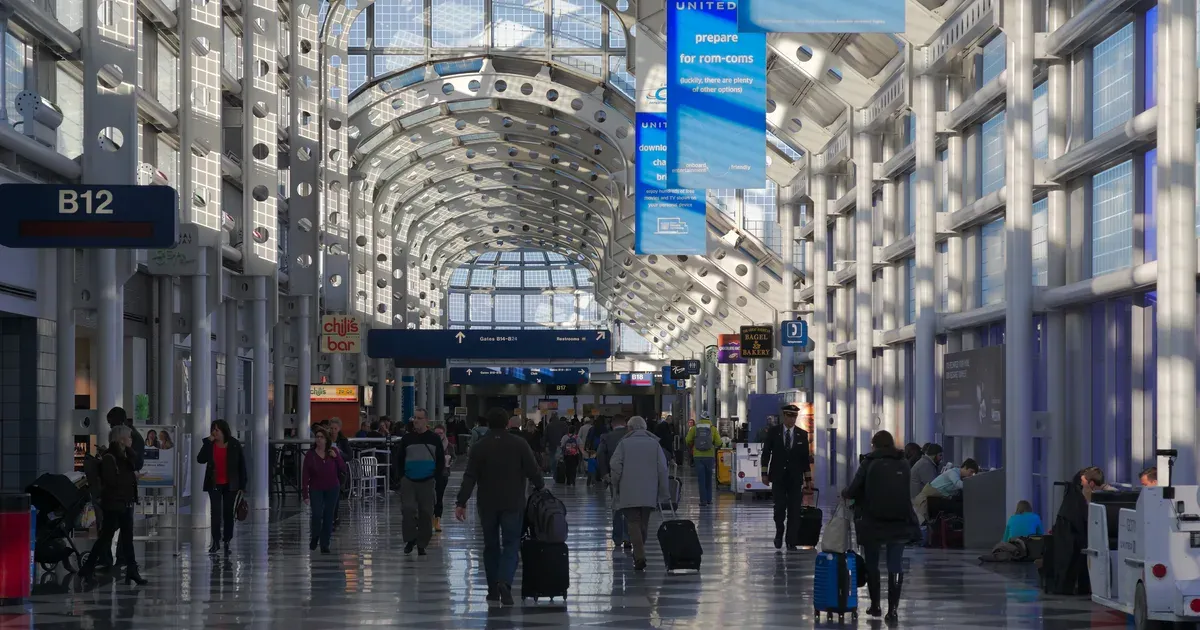
Labor Day weekend lands on September 7 this year, and the instinct is to assume every big hub turns into the same mess. The data says otherwise. FlyIndex’s TSA wait records put O’Hare’s peak at 30 minutes on Sundays at 3 PM and LAX’s at 25 minutes on Sundays at 9 AM — a five-minute gap that tells you almost nothing useful. The number that separates these two airports is a different one entirely.
O’Hare has 28 quiet checkpoint slots. LAX has 10.
The comparison that matters
| ORD | LAX | |
|---|---|---|
| TSA peak | 30 min, Sun 3 PM | 25 min, Sun 9 AM |
| Quiet slots per week | 28 | 10 |
| Best departure hours | 2 AM, 1 AM, 10 PM | 1 AM, 12 AM |
| Terminals | 4 | 9 |
| Restaurants / shops | 35 / 9 | 97 / 86 |
| Immigration peak | 78 min, Sun 4 PM | 77 min, Sun 3 PM |
Read that table twice. The peaks are close. Everything else isn’t.
What changes in peak season
Volume, not shape. This is the part most holiday travel advice gets backwards.
A holiday weekend doesn’t invent new bad hours — it deepens the ones already there. Both airports peak on Sunday. Both peak in the back half of the day for arrivals. What Labor Day does is push more people into the same slots, so the 30-minute ceiling at O’Hare becomes the number you’re likely to hit rather than the number you occasionally hit. Same window, worse odds.
The secondary effects are the ones that actually blow up itineraries. Parking structures fill by mid-morning on the Friday of a holiday weekend. Rental returns run long. Curbside drop-off backs up half a mile before the terminal, which at O’Hare’s four-terminal layout means you can be physically at the airport and still fifteen minutes from a door. None of that shows up in a checkpoint wait number, and all of it comes out of your buffer.
Add 30 minutes to whatever you’d normally allow. That’s the whole holiday adjustment.
What doesn’t change
The overnight trough. It’s stubborn, it’s real, and at O’Hare it’s unusually generous.
Our ORD data flags 2 AM, 1 AM and 10 PM as the best departure hours, and 28 slots across the week land in the quiet band. That’s a lot of room. It means a Chicago traveler with any schedule flexibility can find a genuinely calm checkpoint even in the first week of September, which is not something you can say about every hub. The full ORD hourly breakdown shows where those slots cluster.
LAX gives you 10 slots, at 1 AM and midnight. That’s a narrower door, and it’s a door most people can’t walk through — a midnight departure from Los Angeles is a red-eye, and a red-eye is a decision about your whole trip, not a scheduling tweak. The LAX TSA wait data is worth checking against your specific hour before you assume the 25-minute peak is the ceiling on your inconvenience.
Here’s the thing about that 10-versus-28 gap: it’s a measure of how much slack an airport has. O’Hare’s terminals empty out at night. LAX’s nine-terminal horseshoe keeps humming, because it’s absorbing transpacific departures and late domestic banks long after O’Hare has gone quiet.
The 10 PM slot is the underrated one at ORD
Of O’Hare’s three best hours, two of them require being awake at 1 AM. The third is 10 PM, and it’s the one worth building a trip around. It’s a normal human hour. You can have dinner, drive to the airport, and hit a checkpoint that our data says behaves like the overnight trough rather than the afternoon peak. On a holiday weekend, that’s the closest thing to a free upgrade on offer.
Where the two airports diverge on arrivals
International arrivals peak within a minute of each other — 78 minutes at ORD on Sundays at 4 PM, 77 at LAX on Sundays at 3 PM. Both are more than double their respective TSA peaks. If you’re coming home from a Labor Day trip abroad and connecting onward, the customs hall is the risk, not the security line.
One hour of connection time is a bad joke in that window. Two and a half is defensible. The LAX case is slightly worse in practice because a domestic connection there may require moving between terminals in a nine-terminal complex; O’Hare’s four-terminal footprint is a shorter problem, though the walk between concourses is nobody’s idea of short either.
Where you actually wait it out
If the delay comes anyway — and in the first week of September, it sometimes does — the two airports offer very different consolation.
LAX lists 97 restaurants and 86 shops. O’Hare lists 35 restaurants and 9 shops. Nine. Across four terminals. That is a startlingly thin retail directory for one of the busiest airports in the country, and it means a three-hour weather delay at O’Hare is a materially worse experience than the same delay in Los Angeles. Plan accordingly: at ORD, buy the food when you see the food.
What to actually do this weekend
- Flying ORD Sunday: avoid 1 PM–5 PM if you have any choice. That’s where the 30-minute peak lives.
- Flying LAX Sunday: the 9 AM peak is early, so a mid-afternoon departure is the softer play — the inverse of the O’Hare advice.
- Either airport: 30 extra minutes on your buffer, and check parking before you drive.
- Coming home internationally: 2.5 hours minimum on any connection landing Sunday afternoon.
Mid-September is the reward. The back-to-school dip pulls leisure traffic out of the system for a couple of weeks, and the same Sunday-afternoon slots that peak this weekend go back to being merely annoying. If your trip can wait ten days, it should.
Frequently asked questions
Is O'Hare or LAX worse during holiday weekends?
By raw peak, LAX is milder — 25 minutes versus O'Hare's 30. By flexibility, O'Hare wins clearly, with 28 quiet checkpoint slots against LAX's 10. If you can move your departure time, O'Hare gives you far more places to move it to.
What time should I fly out of ORD over Labor Day weekend?
Avoid Sunday mid-afternoon, which is where FlyIndex's 30-minute peak sits. The quiet end of the ORD data is 2 AM, 1 AM and 10 PM, and a late-evening departure is the most livable of those three by a wide margin.
Does the September back-to-school dip actually help?
It thins the leisure traffic in the second and third weeks of the month, but it doesn't move where the peaks sit. Sunday afternoon stays the worst window at both airports; the queue is just shorter within it.
How much earlier should I arrive on a holiday weekend?
Add 30 minutes to your normal buffer at either airport. That covers the checkpoint peak plus the slower parts nobody counts — parking structures filling up, curbside backing up, and rental returns running long.
Sources
- TSA Security Screening
Transportation Security Administration · tsa.gov
- Chicago O'Hare International Airport
Chicago Department of Aviation · flychicago.com
- Los Angeles International Airport
Los Angeles World Airports · flylax.com
Keep reading
 seasonalMIALAX
Why Miami's Lines Swing 27 Minutes and LA's Don't
MIA's worst hour ranges from 19 to 46 minutes across the week. LAX never leaves a 19-to-25 band. That gap changes how you plan each airport this season.
FlyIndex Editorial seasonalATLORD
Labor Day 2026: The Last Big Weekend of Summer
Labor Day weekend is the final summer travel surge, and the wait data shows exactly where it will hit. Here's the plan for flying that weekend.
FlyIndex Editorial seasonalLAXORD
The September Reset: When Airport Lines Go Quiet
After Labor Day, airport volume drops and the wait data follows. Here's what the September reset looks like and how to take advantage of it.
FlyIndex Editorial