Late August at Aspen, Eagle and Hayden: The Midday Squeeze
Colorado's mountain airports peak at midday, not at dawn, and Eagle hits 52 minutes at noon. Here's how the late-summer schedule shapes each checkpoint.
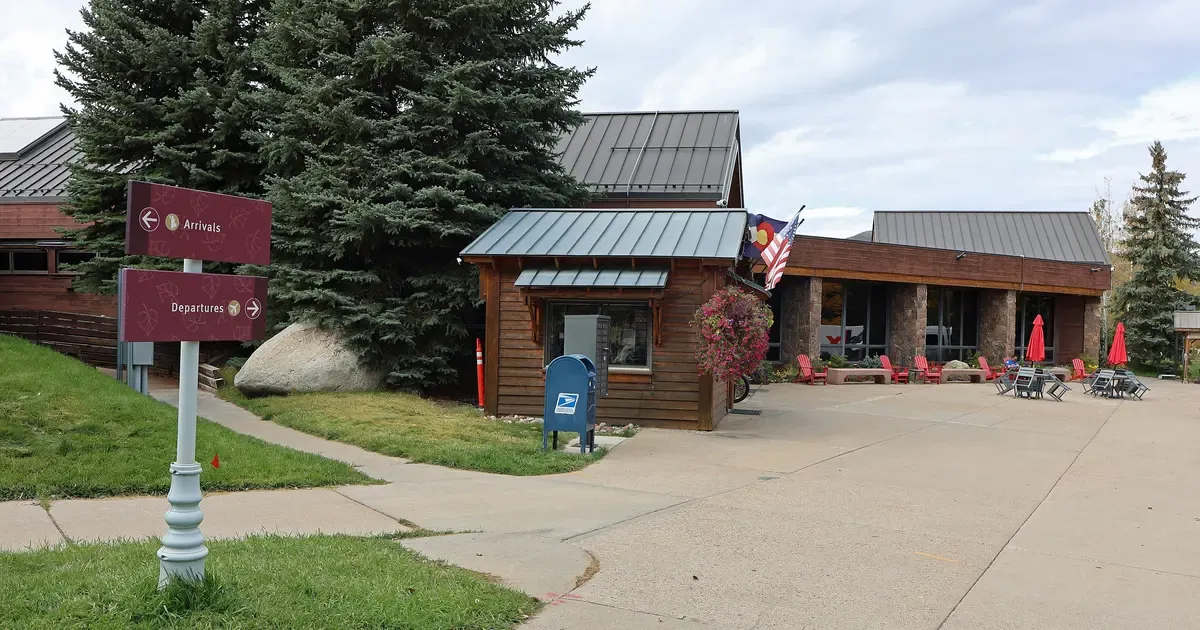
Eagle County Regional peaks at 52 minutes on Monday at noon. Not at 5 AM, not at 6 PM — at noon. All three of Colorado’s mountain airports do this, and it catches people who’ve internalized the standard advice about early flights being the busy ones.
Late August is a specific moment for these fields. Summer hiking and festival traffic is still moving, the ski schedule hasn’t started, and the flight banks are thinner than they’ll be in January. That combination produces a checkpoint that’s mostly empty with a hard hour in the middle of the day.
What are the actual numbers at each airport?
Eagle County (EGE) is the worst of the three. Monday at noon hits 52 minutes. Wednesday at 2 PM runs 50, and Wednesday at 1 PM runs 45. Sunday at 7 AM hits 37, which is the only meaningful early-morning figure at any of these airports.
Eagle’s data covers relatively few operating days, which is itself informative — this is an airport with a dramatically different summer and winter profile.
Aspen/Pitkin County (ASE) peaks at 35 minutes on Friday at noon. Monday at noon runs 30, Wednesday at both 11 AM and noon runs 30, Thursday at 3 PM runs 25, and Sunday at 1 PM runs 25.
Aspen logs 46 hourly slots at five minutes or under, so there’s real quiet in the week. But look at that list again: every single peak hour falls between 11 AM and 3 PM.
Yampa Valley/Hayden (HDN) hits 45 minutes on Thursday at 2 PM. Monday at noon runs 44, Thursday at 3 PM runs 35, and Sunday at 1 PM runs 25. Like Eagle, Hayden’s reporting is sparse across the week.
Why do these airports peak at midday?
Terrain and weather, working through the flight schedule.
All three of these airports sit in mountain valleys with approach paths that are genuinely demanding. Aspen’s approach in particular is one of the more constrained commercial procedures in the country, with a steep descent into a valley and restrictions that make marginal-visibility operations difficult.
Airlines respond by scheduling into the part of the day with the most reliable conditions. Morning valley fog and afternoon thunderstorm development both argue for a midday window, so that’s where the departures cluster.
The result is a checkpoint that has to handle most of the day’s passengers in a three-hour block. At a low-desert airport that block would be spread across sixteen hours. Here it isn’t.
How early should I arrive?
Aspen, midday departure: two hours. The 35-minute peak is not enormous, but the terminal is small and a backed-up checkpoint spills into the ticketing area fast. There’s no room to absorb a surge.
Eagle, midday departure: two hours minimum, and two and a half on a Monday. A 52-minute wait in a terminal this size is a genuinely uncomfortable experience.
Hayden, Thursday or Monday midday: two hours.
Any of the three, outside the 11 AM to 3 PM window: 90 minutes is plenty. The early-morning and evening numbers at these airports are unremarkable except for Eagle’s Sunday 7 AM.
The hourly data is on each page — Aspen, Eagle, Hayden — and it is worth checking before every trip rather than trusting a remembered pattern. These schedules change substantially between seasons.
Does late August change the picture?
Yes, and mostly in your favor.
Winter is when these airports are genuinely difficult. The ski banks are heavier, the weather closes approaches, and Eagle in particular becomes a very different operation with a much fuller schedule. The numbers above reflect a summer profile.
What late August brings instead is a thinner schedule with less redundancy. If your flight cancels out of Hayden in August, the next one might not be until tomorrow. In February there are alternatives.
So the risk shifts. The checkpoint is easier and the rebooking is harder.
Should I drive to Denver instead?
The comparison is worth doing, and it doesn’t always come out the way people assume.
Denver International peaks at 47 minutes on Saturday at 4 AM, with Saturday 10 PM at 44 and Friday afternoons around 40. It logs 21 hourly slots at five minutes or under — a lower quiet count than Aspen’s 46.
So Denver’s checkpoint is not obviously better than the mountain airports’. What Denver gives you is schedule depth: dozens of daily departures to most destinations, and a rebooking option when things go wrong.
What it costs is the drive. Aspen to Denver is roughly four hours in good conditions, and I-70 through the mountain corridor is not reliably in good conditions.
My rule for late summer: fly the mountain airport. The weather risk that justifies the Denver drive is a winter problem, and in August you’re trading four hours of driving for a checkpoint difference that barely exists. You can compare on the Denver TSA wait times page.
What about the return?
The return leg is where mountain airport trips actually fail, because it’s the leg with a deadline.
If you’re connecting through Denver or another hub to get home, a delayed mountain departure can cost you the whole day. Build in a connection buffer well beyond what you’d normally accept — at least 90 minutes at the connecting hub, not the 45 the booking engine offers.
And if you’re on the last flight of the day out of Aspen or Hayden, understand that there isn’t a later one. That’s a different risk calculation than missing an evening departure out of a hub.
The practical summary
Arrive two hours early for any midday flight out of Aspen, Eagle or Hayden. That’s most flights.
Check the hour rather than the day, because these airports concentrate everything into 11 AM to 3 PM and are nearly empty outside it.
Book generous connections on the return, and treat the last flight of the day as the one you don’t want to be on.
The Aspen airport guide has the terminal and ground transport details, and TSA’s screening rules are worth a look if you’re flying out with hiking gear — trekking poles, camp stoves and bear spray all have specific and non-obvious answers.
Frequently asked questions
Why do Colorado mountain airports peak at midday?
Because their flight schedules are built around mountain weather and terrain. Aspen, Eagle and Hayden all have terrain-constrained approaches that favor midday operations over marginal early-morning or late-evening conditions, so the departure bank sits in the middle of the day.
Which mountain airport has the worst security wait?
Eagle County, at 52 minutes on Monday at noon. Wednesday at 2 PM runs 50 and Wednesday at 1 PM runs 45, so Eagle has an elevated midday band rather than a single spike.
How early should I arrive at Aspen airport?
Two hours for a midday departure, which is most of them. Aspen's peak is 35 minutes at noon on Friday, and the terminal is small enough that a busy checkpoint backs up into the ticketing hall quickly.
Do these airports operate every day?
Not with a full schedule. Eagle and Hayden in particular run much heavier winter operations than summer ones, and the wait-time data reflects sparse reporting on several days. Check your specific flight rather than assuming a daily pattern.
Sources
- TSA's screening rules
Transportation Security Administration · tsa.gov
- TSA checkpoint travel numbers
Transportation Security Administration · tsa.gov
- National Airspace System status
Federal Aviation Administration · nasstatus.faa.gov
- Aspen-Pitkin Co/Sardy Field official website
Aspen-Pitkin Co/Sardy Field · aspenairport.com
Keep reading
 seasonalTYSMSN
College Move-In Week Hits Regional Airports Hardest
Late August sends students through small airports that aren't built for it. Here's which regional checkpoints spike and how to time a move-in weekend flight.
FlyIndex Editorial seasonalORDLAX
ORD vs LAX in Peak Season: 28 Quiet Hours Against 10
ORD security tops out at 30 minutes on Sunday at 3 PM; LAX at 25. The gap that matters this Labor Day is quiet hours: 28 at O'Hare, 10 at LAX.
FlyIndex Editorial seasonalIAHDFW
Labor Day Weekend: Which Airports Pay a Weekend Penalty
Houston's checkpoint runs 5.6 minutes slower on weekends. Dallas Fort Worth runs slightly faster. The weekend penalty is real, but it is not universal.
FlyIndex Editorial