Hurricane Season and Florida Airports: How to Plan
August is peak hurricane season for the Gulf and Atlantic. Here's what the wait-time data can and can't tell you about flying through Florida in a storm window.
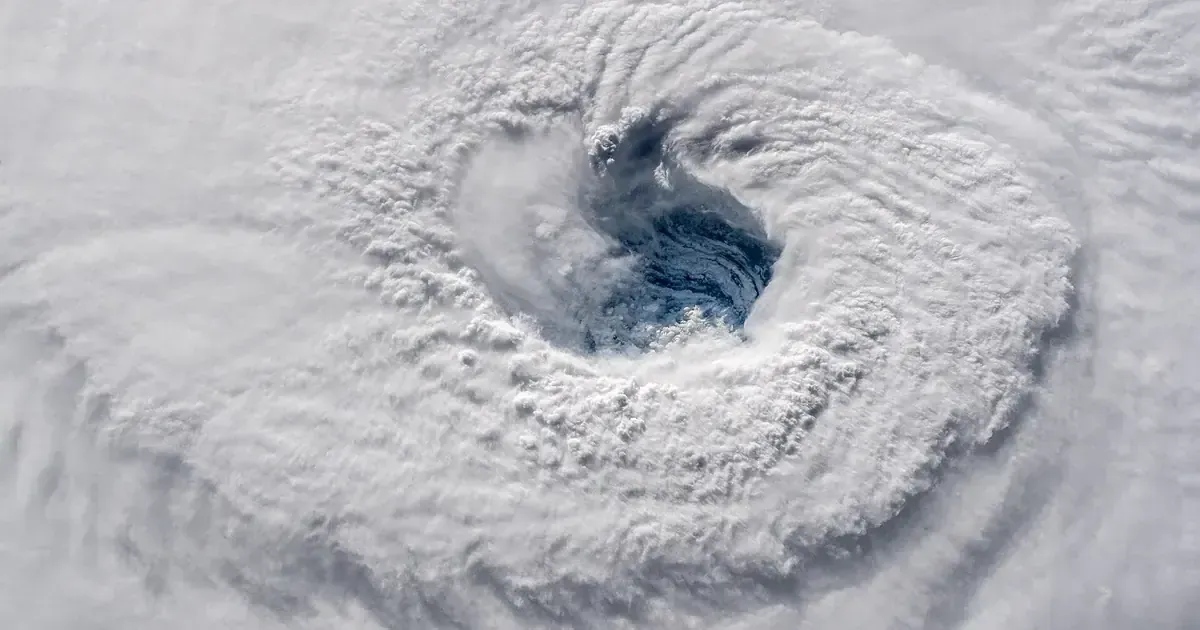
The wait-time data on this site can’t tell you when a hurricane is coming. It’s historical checkpoint data, not weather radar, and pretending otherwise would be a disservice. But there’s a version of hurricane planning that the data absolutely does help with, and it’s the part most people skip: knowing how your airport behaves around a disruption.
August is the active core of Atlantic hurricane season, and Florida’s airports sit in the middle of it. Here’s how to think about it like an operations person instead of a passenger.
What the data can’t do
First, the honest part. TSA wait-time history won’t predict a storm path, a closure, or a reopening. If someone is selling you “data-backed hurricane predictions,” it’s noise. The weather models are the tools for that, and even they get it wrong.
What the data does is establish the baseline. It tells you what normal looks like at your airport, so that when a storm window hits, you can tell the difference between a real problem and a normal busy day.
What the data can tell you
Here’s what the historical pattern shows at Florida’s gateways. The MIA TSA wait times show an airport that runs hot at specific hours, Monday at noon being the worst at 46 minutes. The FLL TSA wait times show an airport with an even bigger peak, 69 minutes on Sunday at 11 AM. Those numbers matter in a storm window because they’re the recovery baselines.
When a hurricane threatens, the pattern shifts in a predictable way: departures spike in the 24 to 48 hours before landfall as people leave early, then operations pause, then the airport reopens and eats a backlog of stranded passengers. The pre-storm spike is real, and it’s worse at the airports with the highest normal volume.
The airports in the path
| Airport | Normal peak | Storm window concern |
|---|---|---|
| MIA | 46 min, Mon noon | Big international volume, slow re-entry |
| FLL | 69 min, Sun 11 AM | Largest peak in Florida, same risk |
| MCO | 33 min, Thu 5 AM | Inland, but evacuees pile up |
| JAX | 30 min, Mon 4 PM | Northeast Florida, direct hit risk |
| RSW | 21 min, Mon noon | Smallest operation, slowest restart |
The airports with the smallest normal operations, like RSW in Southwest Florida, are the ones to watch in a storm window. They have the least staff and the least capacity to absorb a backlog, so a two day closure can mean a four day recovery.
What to actually do
Hurricane-season flying in Florida is manageable if you treat it as an operational problem instead of a weather gamble:
- Book with flexibility. Refundable or changeable fares are the entire strategy. The cheapest non-refundable fare is the expensive one when a storm shifts your dates.
- Watch the forecast in the 7 day window. The models are reliable enough at that range to make decisions. Don’t wait until the day before.
- Avoid arriving the day before a forecast landfall. That’s the peak-evacuation window, and the departures spike right as the airport starts tightening operations.
- Have a rebooking plan. Know your airline’s waiver policy before you need it, and check the arrival guide for your airport so you know your normal baseline.
- Don’t book a tight connection through a storm-path airport. If you’re connecting through MIA or FLL during hurricane season, the connection buffer is not the place to save money.
The pre-storm departure spike
The most predictable part of a storm window is the 24 to 48 hours before landfall, when departures spike as people leave early. The airports with the biggest normal peaks are the ones where that spike hurts most. Fort Lauderdale’s Sunday mid-morning wall at 69 minutes and Miami’s Monday noon peak at 46 minutes are the baselines, and a pre-storm evacuation day is those baselines with the volume turned up.
The reason to care: the spike happens before the airport closes, not after. If you’re trying to get out ahead of a storm, you’re competing with everyone else who had the same idea, and the checkpoint is where the competition shows up. The escape flight is not the easy flight.
The recovery math
The second thing to understand is that the airports don’t all recover at the same speed. A big operation like MIA or Orlando has the staff to eat a backlog quickly once the airport reopens. A smaller operation like RSW in Southwest Florida has less capacity, and a two day closure can mean a multi-day recovery. If your trip is time-sensitive and a storm is in the forecast, the small airport isn’t the shortcut it normally is.
That’s the operational version of hurricane planning: know your airport’s baseline, expect the spike before the storm, and assume the recovery takes longer than the closure. The wait data won’t tell you when the storm comes, but it tells you exactly how your airport handles the pressure when it does.
The honest version
Hurricane season in Florida is a real consideration from August through October, and the airports in the path have real constraints. The wait data can’t tell you when the storm comes, but it can tell you what normal looks like, and that baseline is what you plan around. Book flexibly, watch the forecast, and treat the 48 hours before a landfall as a no-fly window. The airports will recover. The question is whether you’re flexible enough to recover with them.
Frequently asked questions
When is hurricane season for Florida airports?
The Atlantic hurricane season runs June through November, with the active core from mid-August through October. Florida airports sit in the direct path of most major storms.
Which Florida airports get hit by hurricanes?
All of them can. Miami, Fort Lauderdale, Orlando, Jacksonville, and Southwest Florida's RSW are the main commercial gateways in the storm path, and each has its own closure and recovery history.
Should I fly to Florida during hurricane season?
You can, but plan for it. Book with flexibility, watch the forecast in the week before your trip, and avoid arriving the day before a forecast landfall.
What happens to airport wait times during a storm?
Departures spike in the 24 to 48 hours before a landfall as people evacuate early, then operations pause and restart. The wait data returns to normal once the airport reopens and the backlog clears.
Keep reading
 seasonalFLLMIA
Florida Airports in Late August: The Wait Data Says Get There Early
August is peak season at Florida airports, and the wait data shows Fort Lauderdale, Miami, and Orlando all running hot. Here's the day-by-day picture.
Lena Vasquez securityFLLMIA
Fort Lauderdale's Sunday Morning TSA Line Beats Miami's
FLL's TSA waits peak at 69 minutes on Sunday at 11 AM, the longest in Florida and worse than Miami's 46-minute Monday peak. Here's the pattern.
Mara Quinn seasonalLAXORD
The September Reset: When Airport Lines Go Quiet
After Labor Day, airport volume drops and the wait data follows. Here's what the September reset looks like and how to take advantage of it.
Mara Quinn