Why Hilo's TSA Line Peaks at 8 AM Tuesday: 69 Minutes
Hilo's checkpoint hits 69 minutes at 8 AM on Tuesdays, then hands back 70 quiet hours. The arrival math for an ITO morning departure, and when to skip it.
Sixty-nine minutes. That’s the worst checkpoint hour of the week at Hilo, and it lands Tuesday at 8 AM — which is not the hour anyone expects to lose an hour. FlyIndex’s historical TSA data puts ITO’s peak there, and it also counts 70 quiet slots across the same week. Hilo isn’t a busy airport. It’s a spiky one, and those are different problems.
Why does the line pile up at 8 AM on a Tuesday?
Small airports don’t have a rush hour. They have a rush.
At a big hub, departures are spread across the clock, so the checkpoint absorbs demand the way a wide river absorbs rain. Hilo doesn’t work like that. The flights that leave in the morning leave more or less together, everyone shows up for them inside the same forty-minute window, and the checkpoint has however many lanes it has. The wait isn’t a function of how many people fly through ITO in a day. It’s a function of how many arrive at the same door at the same time.
Our data tells you when, not why, and I want to be straight about which half of that sentence I’m speculating on. The when is measured: 69 minutes, Tuesdays, 8 AM, on the ITO TSA wait time page. The why is the obvious mechanical read — a morning departure bank hitting a checkpoint sized for the average day rather than the worst hour of it. Staffing a small-airport checkpoint for a 40-minute surge means overstaffing it for the other 23 hours, and nobody funds that.
The practical consequence matters more than the diagnosis. A queue that builds from a bank doesn’t ease off gently on either side of the peak hour. If your Tuesday flight leaves at 7:40 AM, you’re in the front of that surge. If it leaves at 9:15, you’re behind it, inheriting whatever the 8 AM crowd left in the lane. Treat the whole 7-to-10 block as one event.
How early should I actually be at ITO?
Budget against the peak you might hit, not the average you’ll usually get. Here’s the way I’d split it:
| Departure window | Be at the curb | What you’re covering |
|---|---|---|
| 7 AM–10 AM Tuesday | 2 hours | The full 69-minute peak, plus bag drop |
| 7 AM–10 AM, other days | 1 hr 45 min | The same morning bank, without the worst hour |
| Weekday midday | 1 hr 30 min | A checkpoint below peak but not empty |
| 2 PM, 4 PM or 7 PM | 1 hr 15 min | One of the quiet windows; bag drop is the limiter |
Two hours at an airport this size feels absurd written down. On a Tuesday morning it isn’t — 69 minutes of queue eats most of a 90-minute buffer before you’ve done anything else, and the thing that gets squeezed is the part you can’t compress: the bag-drop cutoff. Miss that and the checkpoint number stops mattering entirely.
The good news is the other end of the trip. Once you’re through screening at Hilo, you’re basically at your gate. There’s no ten-minute march down a pier, no train, no second security theater in a satellite concourse. Every minute you spend in the queue is a minute you actually get back if the queue moves faster than the peak. That’s a much better shape of risk than the one you carry at a big airport, where clearing security early still leaves you a long walk from a gate you haven’t found yet.
What do 70 quiet hours actually buy you?
Seventy out of 168. That’s about two of every five hours in a Hilo week sitting in the genuinely-quiet band in FlyIndex’s data — a ratio a lot of mainland airports would take happily. The airport is calm most of the time. It just isn’t calm when the most flights leave, which is the same sentence as “it isn’t calm when you want to fly.”
The three windows our data flags as best are 2 PM, 4 PM and 7 PM. Look at that list for two seconds and the pattern gives itself away: every one of them is after the morning bank has emptied the building. There’s no overnight loophole here of the kind a 24-hour hub offers, because a small airport isn’t open around the clock in the way that would make a 2 AM slot meaningful. The trough is the afternoon, not the small hours.
So the advice writes itself, and it’s slightly unusual advice for a security post. If your schedule has any give in it, take the afternoon flight out of Hilo. Not for a marginal ten minutes — for the difference between a possible 69-minute queue and a window our data says is one of the calmest in the week. That’s a genuinely large trade for a booking decision that costs you nothing but a lie-in.
The exception worth knowing
Same-day connections are the reason people take the 8 AM anyway. If you’re heading to the mainland through Honolulu or Kahului, the morning departure is the one that makes the onward connection work, and no amount of wait-time data changes that. Fine. Then you’re not choosing a time, you’re buying insurance: arrive two hours early, check the bag first, and accept that the queue is the price of the itinerary. What you shouldn’t do is book that flight and plan for it like an afternoon one.
Do arrivals have the same problem?
No, and the gap is bigger than I expected.
ITO’s immigration wait peaks at 24 minutes on Fridays at 3 PM, per FlyIndex’s immigration wait time data for Hilo. Set that next to the 69-minute checkpoint peak and the picture inverts: arriving from abroad at the worst hour of the week costs you about a third of what departing at the worst hour does. Twenty-four minutes is a modest queue anywhere, and at an airport carrying “International” in its name it’s close to a non-event.
Two things follow. First, if you have an onward interisland connection stapled to an international arrival at Hilo, the immigration hall is not the thing that will break it — bag reclaim and the walk are. Second, the Friday-afternoon peak sits in a completely different part of the week from the Tuesday-morning one, so there’s no compounding effect where both queues are ugly on the same day. They’re separate problems with separate calendars.
The version I’d give a friend flying out of Hilo
Take the afternoon flight if you can. If you can’t, and it’s a Tuesday morning, be at the curb two hours out and don’t negotiate with yourself about it in the car. Any other weekday morning, 1:45 is honest. Afternoons and evenings, 1:15 is plenty and the checkpoint won’t be what slows you down.
And check the ITO hub page before you leave the house rather than trusting a number you read once — the peak is a pattern, not a promise, and patterns move.
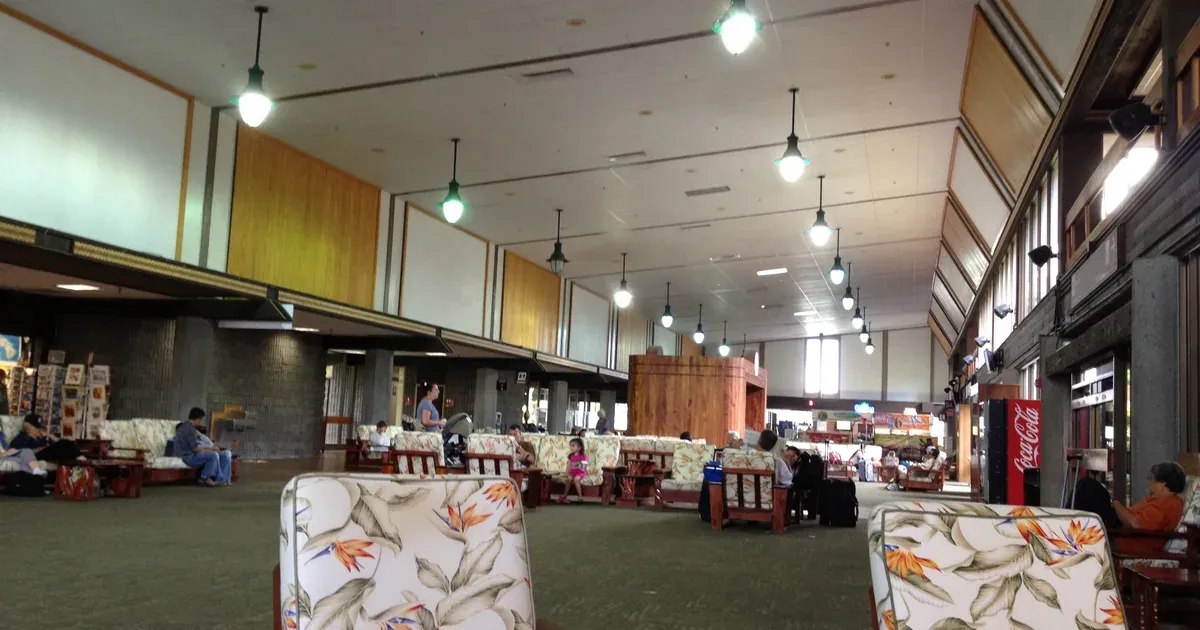
One last thing about the wait, if it does catch you. Hilo’s departure lounge is open to the outside air, with wooden chairs upholstered in a bird-of-paradise print that has clearly been there longer than any of us, and when it rains — it rains a lot in Hilo — you hear it on the roof from the seat. Sixty-nine minutes in that queue is not the same sixty-nine minutes you’d spend under fluorescent lights in a windowless hall at a hub. It’s still sixty-nine minutes. Bring the coffee.
Frequently asked questions
What is the worst time to go through security at Hilo airport?
Tuesday at 8 AM. FlyIndex's TSA data records a 69-minute peak wait in that slot at ITO, and the hours immediately around it carry the same morning departure bank, so a 7:40 AM or a 9:15 AM Tuesday flight sits inside the same crush.
How early should I get to ITO for a morning flight?
Two hours for anything leaving between 7 and 10 AM on a Tuesday, which covers the 69-minute peak with a real margin. Ninety minutes is enough on other weekday mornings, and a Hilo gate is a short walk from the checkpoint once you are through.
Does Hilo airport have quiet times for security?
Yes, and plenty of them. ITO records 70 quiet slots in a 168-hour week in FlyIndex data. The 2 PM, 4 PM and 7 PM windows are the standouts — the afternoon and evening at Hilo behave nothing like the morning.
How long does immigration take at Hilo International Airport?
ITO's immigration wait peaks at 24 minutes on Fridays at 3 PM in FlyIndex's data. That is a modest number for an international airport, and it means an inbound connection at Hilo is far less risky than a morning departure from it.
Is a 6 AM departure better than an 8 AM one at Hilo?
Usually, yes. The 69-minute peak sits at 8 AM, which means the queue builds ahead of it rather than starting there — but the earlier you are in front of the morning bank, the less of it you inherit. Leaving before it, or waiting until the afternoon, are the two ways out.
Sources
- TSA Security Screening
Transportation Security Administration · tsa.gov
- Hilo International Airport (ITO)
Hawaii Department of Transportation, Airports Division · airports.hawaii.gov
- CBP Airport Wait Times
U.S. Customs and Border Protection · awt.cbp.gov
Keep reading
 securityJFK
JFK Has Zero Quiet Hours. Here's How to Budget Around It
JFK is the rare big airport with no quiet hour in all 168 of them. That changes the arrival math: stop hunting a soft slot and budget for the 33-minute peak.
FlyIndex Editorial securityEGE
Beat the 52-Minute Monday Line: When to Arrive at EGE
EGE hits 52 minutes Mondays at 12 PM with zero quiet slots in FlyIndex data. Get there before the midday bank to beat the crush at Eagle County Regional.
FlyIndex Editorial securityBNA
Nashville Has One Bad Hour a Week: Friday at 5 AM
BNA's checkpoint hits 33 minutes on Friday at 5 AM and never tops 8 minutes on a Saturday. Here is the only morning at Nashville that needs a real buffer.
FlyIndex Editorial