Clearing Customs at MIA: When the CBP Line Backs Up
Miami's CBP wait swings hard by day and hour, peaking at 74 minutes on Sunday afternoons. Here's the pattern and the arrival windows worth avoiding.
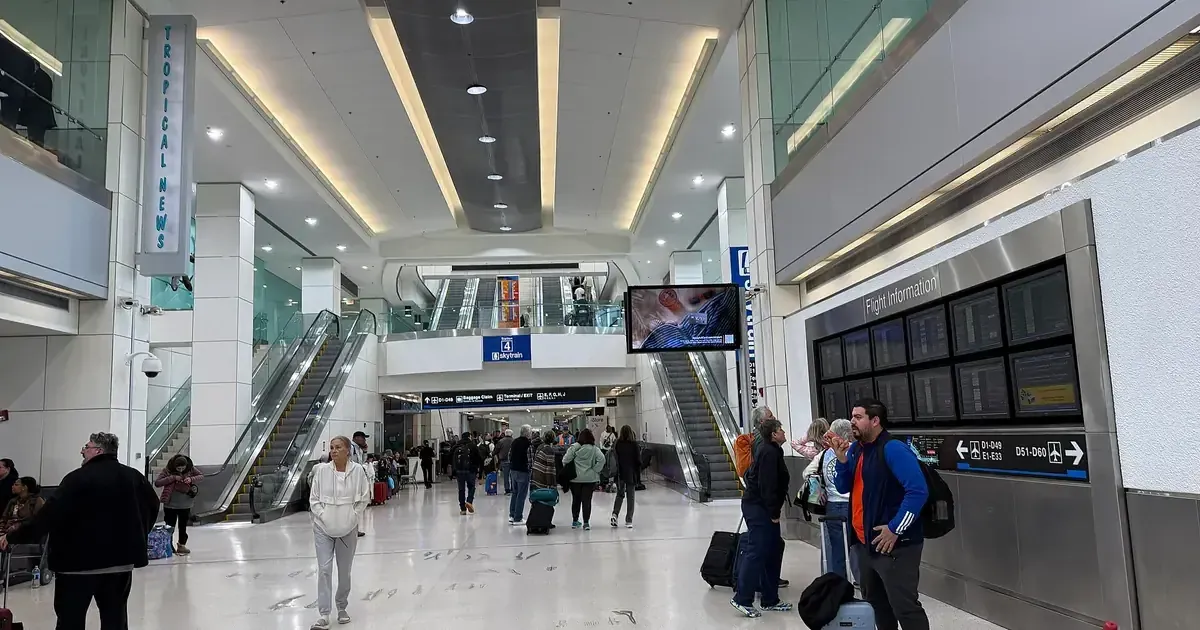
The same mistake plays out over and over at Miami: people treat CBP like a random inconvenience instead of a predictable pattern. It’s not random. MIA’s immigration line has a rhythm, and once you see it, you stop getting surprised by it.
Miami is a real international gateway. Take it seriously
MIA isn’t a secondary airport that happens to have some international flights. It’s one of the busiest U.S. entry points, especially for Latin American and Caribbean traffic, which means CBP volume is consistently heavy. The MIA immigration wait times page shows the full hourly breakdown, and the spread between the best and worst slots is wide.
The people who get burned are the ones who planned a tight connection based on a “typical” customs time. There’s no typical time at MIA. There’s the time for the day and hour you actually land.
The weekly pattern
The rule that matters: the day you land counts for more than the hour. Weekend arrival banks run hot. Mid-week mornings are the calmest window.
MIA’s CBP line peaks at 74 minutes, on Sundays at 3 PM, according to FlyIndex’s immigration wait data. That is not a rounding error on a 20-minute average. It’s an hour and a quarter in a hall with no seats, before you have touched a bag. The peaks cluster exactly where you’d guess: late-afternoon arrival banks, when the South American and Caribbean flights land on top of each other. Mid-week mornings run a fraction of that.
How Miami compares to the other big gateways
Miami has a reputation as the worst customs hall in the country. The data says it’s bad, but not the worst:
| Airport | Peak CBP wait | When |
|---|---|---|
| SFO | 79 min | Sunday, 4 PM |
| ORD | 78 min | Sunday, 4 PM |
| JFK | 77 min | Sunday, 3 PM |
| LAX | 77 min | Sunday, 3 PM |
| EWR | 76 min | Sunday, 4 PM |
| ATL | 75 min | Sunday, 3 PM |
| MIA | 74 min | Sunday, 3 PM |
Six gateways are worse. What stands out is the agreement: every one of them peaks on a Sunday afternoon, within an hour of the others. That isn’t a Miami problem — it’s what a week of international travel looks like when everyone flies home at the end of it. If your itinerary can move off Sunday afternoon at any of these airports, that’s the single highest-value change available to you.
If you have any flexibility in your arrival schedule, this is the lever to pull. A Wednesday morning arrival at MIA is a fundamentally different customs experience than a Sunday afternoon one, even though it’s the same airport and the same CBP staff.
Don’t forget the departure side
Arrivals get the attention, but Miami’s checkpoint is the harder number for most travelers. MIA’s TSA wait peaks at 46 minutes on Mondays at noon — a genuinely unusual shape, since most large airports peak on a Sunday afternoon or a weekday dawn. Monday lunchtime at MIA is the business-travel outbound wave hitting a checkpoint staffed for a slower hour.
The good news is that Miami does go quiet, which is more than JFK can say. MIA logs 29 genuinely quiet hours a week, clustered at midnight, 1 AM, and 2 AM. That’s a real overnight trough — useful if you’re on a red-eye to South America, useless otherwise. The MIA TSA wait times page has the full hourly grid.
Global Entry changes the math
To put it plainly: if you fly internationally more than twice a year, Global Entry pays for itself, and at a gateway like MIA it pays for itself almost immediately. You bypass the main interview line, hit a kiosk, and walk. The time savings on a single bad-peak arrival can be the difference between making and missing a connection.
“It’s only a few minutes” is the assumption that breaks on a Sunday afternoon. Seventy-four minutes is not a few minutes, and Global Entry moves you out of the queue where nearly all of it accumulates. At $120 for five years, two international trips a year makes it arithmetic rather than a judgement call.
Planning around your actual arrival slot
The MIA arrival guide folds the customs pattern into a broader arrival recommendation, but for international arrivals specifically, do this:
- Check the immigration wait times page for your arrival day and hour.
- Build buffer for peak slots. If you’re landing in a heavy window, don’t plan a tight domestic connection.
- Know your terminal. MIA’s terminals affect where you clear customs and where you recheck bags.
- Have your documents ready. The line moves at the speed of the slowest person fumbling for their passport.
The honest version
MIA customs isn’t chaotic. It’s busy on a schedule, and the schedule is published. Land mid-week in the morning and it’s manageable. Land at 3 PM on a Sunday and you’re in the 74-minute slot with several hundred people who also thought their connection was fine.
Plan for the hour you’re actually landing in, not the average. And if you’re connecting onward, look up the departure peak too — clearing customs quickly only helps if the checkpoint on the other side isn’t the thing that gets you.
Frequently asked questions
How long are customs wait times at Miami airport?
CBP wait times at MIA vary significantly by day and hour. Peak windows can reach double-digit minutes, while off-peak slots, especially mid-week mornings, are much lighter. Check the FlyIndex MIA immigration wait times page for the hourly breakdown.
What is the best time to arrive at MIA for immigration?
Mid-week mornings are typically the calmest window for clearing customs at Miami. Weekends and late-afternoon arrival banks are the heaviest.
Does Global Entry help at MIA?
Yes, significantly. Global Entry bypasses the main CBP interview line. If you fly internationally more than twice a year, the enrollment fee pays for itself quickly at a gateway like MIA.
Is MIA busy for international arrivals?
Yes. Miami is one of the busiest U.S. international gateways, particularly for Latin American and Caribbean flights, so CBP volume is consistently high.
Sources
- Airport Wait Times
U.S. Customs and Border Protection · awt.cbp.gov
- Trusted Traveler Programs (Global Entry, NEXUS, SENTRI)
U.S. Customs and Border Protection · ttp.cbp.dhs.gov
- Miami International Airport official website
Miami International Airport · miami-airport.com
- Security Screening
Transportation Security Administration · tsa.gov
Keep reading
 internationalMIA
Miami Customs Peaks at 74 Minutes: The Sunday 3 PM Wall
MIA's CBP line peaks at 74 minutes on Sunday at 3 PM, among the longest in the country. Here's the weekly pattern at the gateway to Latin America.
FlyIndex Editorial internationalORD
O'Hare's 78-Minute Sunday Afternoon Customs Line
ORD's immigration wait peaks at 78 minutes on Sunday at 4 PM, the second-worst in our data. Here's the pattern at the Midwest's busiest gateway.
FlyIndex Editorial internationalLAX
LAX Customs on Sunday Afternoon Is a Two-Act Play
LAX's immigration line peaks at 77 minutes on Sunday at 3 PM. Here's the arrival-window pattern at the Pacific gateway, and how to land outside it.
FlyIndex Editorial